
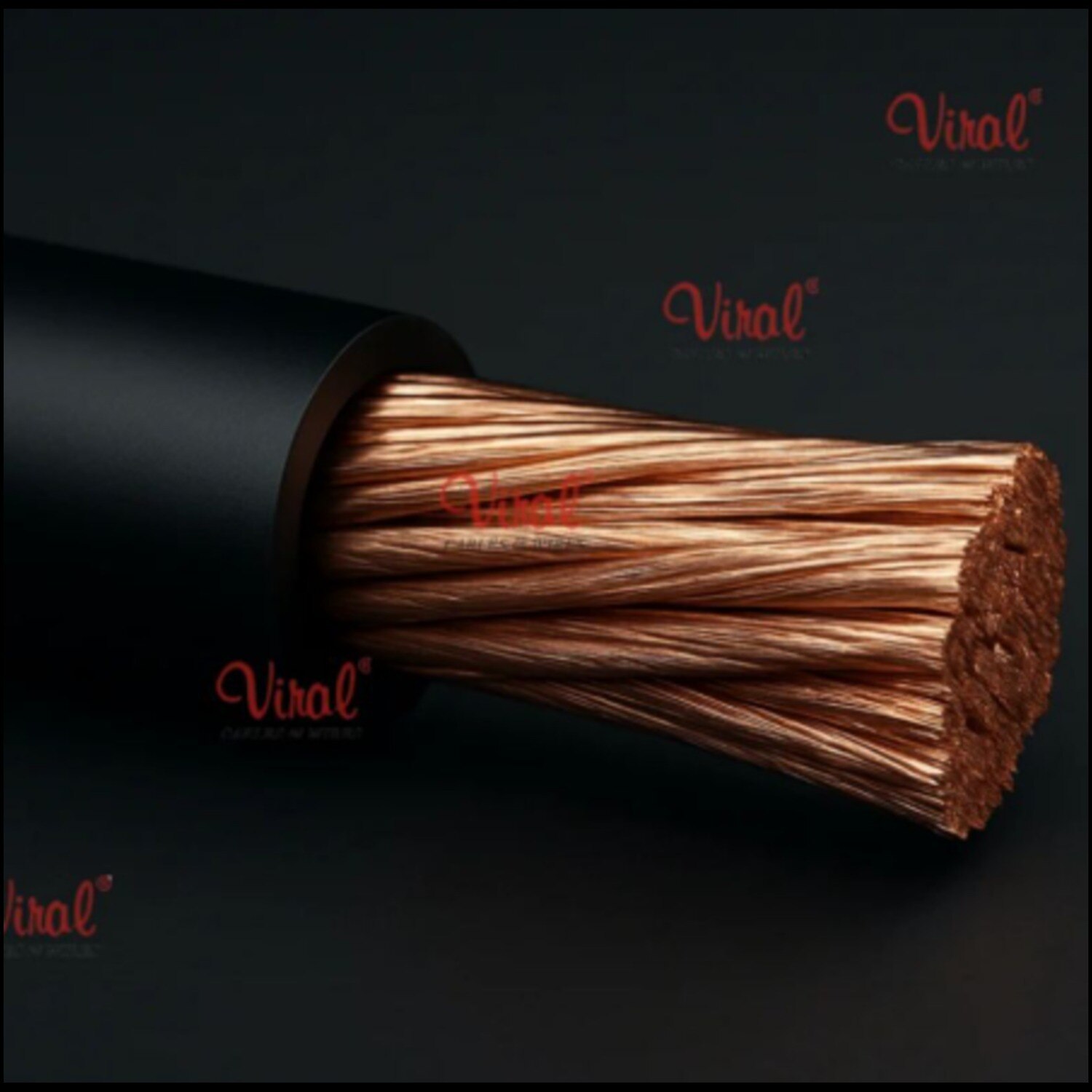
A 25 mm² or 35 mm² welding lead overheats when current, time, heat dissipation, resistance, or connection quality exceeds what the complete installation can handle. You will be able to separate conductor overload from voltage-drop problems, failing terminations, damaged strands, and unsafe operating conditions, then decide whether to repair, replace, isolate, or test the circuit.
Key takeaways
- Treat catalogue current ratings as installation-specific, not universal safe limits.
- Reduce load for long leads, high duty cycles, poor ventilation, or grouped cables.
- Inspect lugs, connectors, strands, crimps, and return clamps for local hot spots.
- Stop welding and isolate the lead when insulation, strands, or terminals show heat damage.
The current rating is not the same as a safe installation rating
25 mm² and 35 mm² are area labels, not universal welding-current ratings. A catalogue current figure can assume a specific conductor construction, insulation temperature rating, ambient temperature, ventilation, grouping, cable length and duty cycle; your installation may not match it.
I²R heating rises sharply: 10% more current creates about 21% more heat, and double current creates about four times more. Those are common welding cable overheating causes.
| Cable | Copper resistance at 20 °C | Same-length comparison |
|---|---|---|
| 25 mm² | 0.724 Ω/km | Higher loss |
| 35 mm² | 0.524 Ω/km | About 29% lower resistance |
At the same current and length, 35 mm² reduces conductor loss, but it cannot fix an excessive machine duty cycle or a hot termination. Copper resistance increases about 0.39% per °C; at 80 °C, it is roughly 23% higher than at 20 °C, so heating feeds on itself.
Check the tested cable resistance, both leads, connection quality, and whether the cable is bundled or poorly ventilated. A hot lug, clamp, or damaged strand can cause welding cable heat damage while the cable length remains relatively cool.
Choose on resistance, construction, insulation rating, ambient conditions, ventilation, grouping, length, duty cycle, and terminations—not cross-sectional area alone.
Duty cycle, cable length, and cooling turn a rating into a real load
An 80% duty cycle means 8 minutes of welding in a 10-minute machine cycle, followed by 2 minutes of rest. Rest time = cycle time × (1 − duty-cycle fraction): 10 × (1 − 0.80) = 2 minutes. At 100%, the stated cycle permits continuous operation under its specified conditions.
Apply that rating to long beads, gouging, repeated production cycles, and simultaneous welding. Do not assume the cable shares the power source’s label. A lead that survives a short weld can overheat when heat accumulates.
1. Measure the complete current path: electrode lead plus work-return lead.
At 100 A over 10 m, 25 mm² copper at 0.724 Ω/km produces about 0.724 V drop and 72.4 W of I²R heat; 35 mm² at 0.524 Ω/km produces about 0.524 V and 52.4 W. Use the tested cable resistance, actual current, and full path length.
2. Uncoil and separate loaded leads. Bundling, tight coils, debris-covered cable, restricted airflow, hot steel, and direct sun trap heat. Mumbai heat reduces the margin further; humidity itself is not the main copper-heating source, but wet or contaminated connections increase contact resistance.
3. Inspect the return path as carefully as the electrode lead. A small, painted, corroded, or loose clamp concentrates current at a tiny contact area and can create one of the welding cable overheating causes.
For 25 35 sq mm welding cable for overheating in mumbai, check the installation—not only the printed size—before increasing conductor area.
Find the hot spot instead of blaming the cable size
A connector can burn while the cable jacket metres away looks normal. Find the hot spot during a representative weld, using this fixed sequence:
- Compare the cable mid-run, then both cable ends.
- Check the electrode holder, work clamp, and each lug separately.
- Check the plug and socket separately.
- Check both welding-machine terminals.
| Hotter location | Likely fault |
|---|---|
| Mid-run | Excessive length, damaged strands, bundling, or restricted cooling |
| Lug, plug, socket, or machine terminal | Loose or contaminated contact, undersized crimp barrel, poor crimp, or damaged contact |
| Holder or work clamp | Poor gripping contact, clamp on insulation, corrosion, or inadequate return path |
Look for softened, blistered, discoloured, hardened, or cracked insulation; exposed copper; green corrosion; flattened sections; melted terminals; burnt odour; recurring hot spots; and intermittent arc performance. These are industrial welding cable faults and signs of welding cable heat damage, not cosmetic defects.
A small, corroded, painted, or loose work clamp forces current through a restricted contact area. Move it to clean bare metal close to the weld.
Measure voltage at the machine terminals and again at the electrode and workpiece while welding; the difference identifies cable or return-path loss. Use infrared inspection to compare temperatures, but confirm findings: shiny copper, arc radiation, emissivity, and surface finish can mislead. Check the de-energised connection, crimp, and resistance or millivolt drop before condemning the cable.
Damaged strands and poor accessories can defeat a larger cable
Replacing 25 mm² with 35 mm² fails when the fault is mechanical or at a termination. Sharp bends at lugs, crushing under vehicles, dragging over edges, hot spatter, and unsuitable strain relief break strands and reduce effective copper area. The remaining strands carry the same current at higher current density, creating local I²R heating.
Compare the sizes by the complete specification, not nominal area alone:
| Comparison | 25 mm² | 35 mm² |
|---|---|---|
| Conductor | Guaranteed resistance, strand count, construction | Guaranteed resistance, strand count, construction |
| Cable design | Insulation type and temperature rating, outer diameter, flexibility, rated voltage | Insulation type and temperature rating, outer diameter, flexibility, rated voltage |
| Evidence | Test standard, declared ampacity and duty-cycle basis | Test standard, declared ampacity and duty-cycle basis |
Consider both the electrode lead and the work-return lead. Do not bundle several energized leads or leave them tightly coiled under load; trapped heat can damage either size. A larger conductor still needs compatible lugs, connectors, bend radius, strain relief, and correctly calibrated crimping or torque tools.
Excessive voltage drop destabilises the arc, encourages higher machine output, and increases I²R heating. Compare the complete current path during a representative weld. This is the practical answer to searches for 25 35 sq mm welding cable for overheating in mumbai and many industrial welding cable faults.
A specification-based selection review, such as one prepared with Viral Electronics PVT LTD / Viral Electronics LLP, should verify those declared values before purchase—not merely select the larger label.
Related products
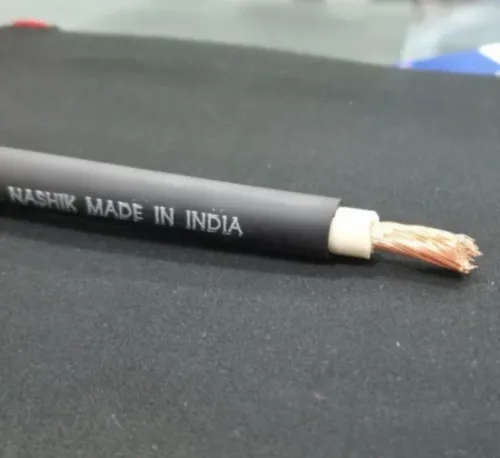
 | Welding Cables Product Details: Cable Size: 35 sq. mm Number of Cores: Single Core Conductor Material: Copper Nominal Cross-Sectional Area: 35 sq. View product → |
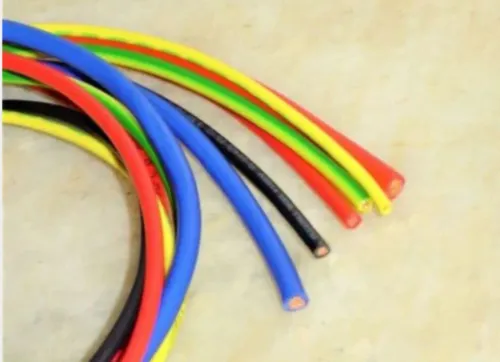
 | Welding Cables Product Details: Cable Size: 25 sq. mm Conductor Material: Copper Insulation Material: Thermoplastic Rubber (TPR) Brand: Viral Cables & Wires Ambient... View product → |
Know when to stop welding, isolate the lead, or test the circuit
Stop welding immediately, de-energise and isolate the equipment, and keep the lead out of service after any welding cable heat damage or unexplained hot spot.
1. Quarantine the lead if insulation is softened, blistered, melted, cracked, hardened, discoloured, or exposing copper. Do the same for a melted terminal, burnt smell, smoke, arcing, repeated hot spots, or intermittent arc performance. These are industrial welding cable faults, not cosmetic defects.
2. Do not wrap tape over the jacket and return the lead to work. Tape does not restore current capacity, insulation integrity, or protection against shock and short circuits.
3. Identify the welding cable overheating causes before repair. Replace the damaged section or complete lead with compatible cable, lugs, connectors, bend radius, and strain relief. Do not increase cable size or lower the current setting by guesswork.
4. Have an electrician inspect and test the circuit when heating is at a machine terminal, plug, work clamp, hidden joint, or return path; when voltage drop is abnormal; when resistance or millivolt-drop testing is needed; or when the fault returns after repair. Measure the complete path: electrode lead plus work-return lead.
5. Use infrared inspection during a representative weld to compare the cable, terminals, clamp, and plugs, then confirm the result with de-energised inspection and appropriate torque, crimp, resistance, or millivolt-drop checks. Reflections and shiny copper can mislead the camera.
Correct the connection, cooling, routing, duty cycle, or damaged conductor before selecting a larger 35 mm² lead, and verify the repaired installation during a representative weld.
Frequently asked questions
Why do 25 mm² and 35 mm² welding cables overheat?
Overheating results from excessive current, long cable length, high duty cycle, poor cooling, grouped leads, damaged strands, loose connections, or undersized accessories.
Does a larger welding cable always carry more current safely?
No. A catalogue rating depends on conductor construction, insulation temperature, ambient temperature, ventilation, grouping, cable length, and duty cycle.
Where should you look for a welding cable hot spot?
Check the cable ends, lugs, crimps, connectors, electrode holder, return clamp, damaged sections, and places where the lead is coiled or trapped.
When should you stop using an overheated welding lead?
Stop welding and isolate the lead when insulation is softened, cracked, discoloured, or melted, or when strands, lugs, connectors, or clamps show heat damage.
Related product
 | Welding Cables Double Insulated Welding Cable 25mm Product Details: Cable Size: 25 sq. mm Conductor Material: Copper Cable Grade: Welding Cable Voltage Rating: Up to 100 V Insulation Material: Rubber... View product → |