
Monsoon water, coastal salt, heat, flooding and condensation can damage a cable system without immediately showing up in a conductor-resistance check. You will be able to match the cable to the actual voltage, duty, route and test method, then decide whether a weather-exposed cable is fit to install, quarantine or replace.
Key takeaways
- Confirm whether the system is 3.3, 6.6, 11, 22 or 33 kV.
- Match insulation, shielding and flexibility to the maintenance task.
- Verify temperature limits, current capacity and wet-weather installation conditions.
- Quarantine cables with damaged jackets, failed tests or monsoon water exposure.
Set the voltage boundary before choosing a cable
A 2 kV minimum-rated cable is not automatically suitable for an 11 kV maintenance job. Confirm the system’s actual voltage—3.3, 6.6, 11, 22 or 33 kV—then compare the cable’s maximum operating voltage, insulation level, and withstand rating for switching surges, impulse, and site test voltage.
| Voltage boundary | What it means | What to verify |
|---|---|---|
| 2 kV minimum-rated | Low-voltage or special test-duty cable; not an 11 kV substitute | Equipment voltage, temporary-lead duty, insulation and test rating |
| 3.3–33 kV | Medium-voltage systems; Indian practice generally includes high voltage above 650 V up to 33 kV | Screened insulation system, metallic screen, sheath, termination and fault-current path |
| Above 33 kV | Extra-high-voltage equipment | Project-specific insulation coordination, clearances, testing and authorised design |
Before selecting high voltage cables for industrial maintenance in mumbai weather, identify the feeder, isolate it, lock and tag it, prove it dead with the correct detector, discharge it, and apply earths. Account for adjacent live circuits and induced voltage.
- Reject a cable choice if the route exposes it to flooding, mud, condensation, salt-laden air, heat or sharp edges.
- Keep cut ends sealed; rain entering a termination can cause failure after a satisfactory conductor-resistance check.
- Treat a single-core cable as one conductor, not a complete circuit: define phase identification, return paths, spacing, parallel runs, magnetic effects, bend radius, and separation from control wiring.
- Use a flexible test lead only for its rated temporary duty; use screened, sheathed or armoured power cable for switchgear, motors, generators and fixed distribution.
Match the cable construction to the maintenance task
A flexible, screened test lead suits short-duration proving or injection work; a fixed screened power cable suits energised plant circuits. For industrial high-voltage cable applications in Mumbai, choose construction by movement, fault protection, heat and moisture exposure—not by voltage label alone.
| Task | Suitable construction | Critical detail |
|---|---|---|
| Temporary test lead | Flexible, fine-stranded copper, screened and heavily sheathed | Use only within its bending radius; seal both ends against rain and condensation. |
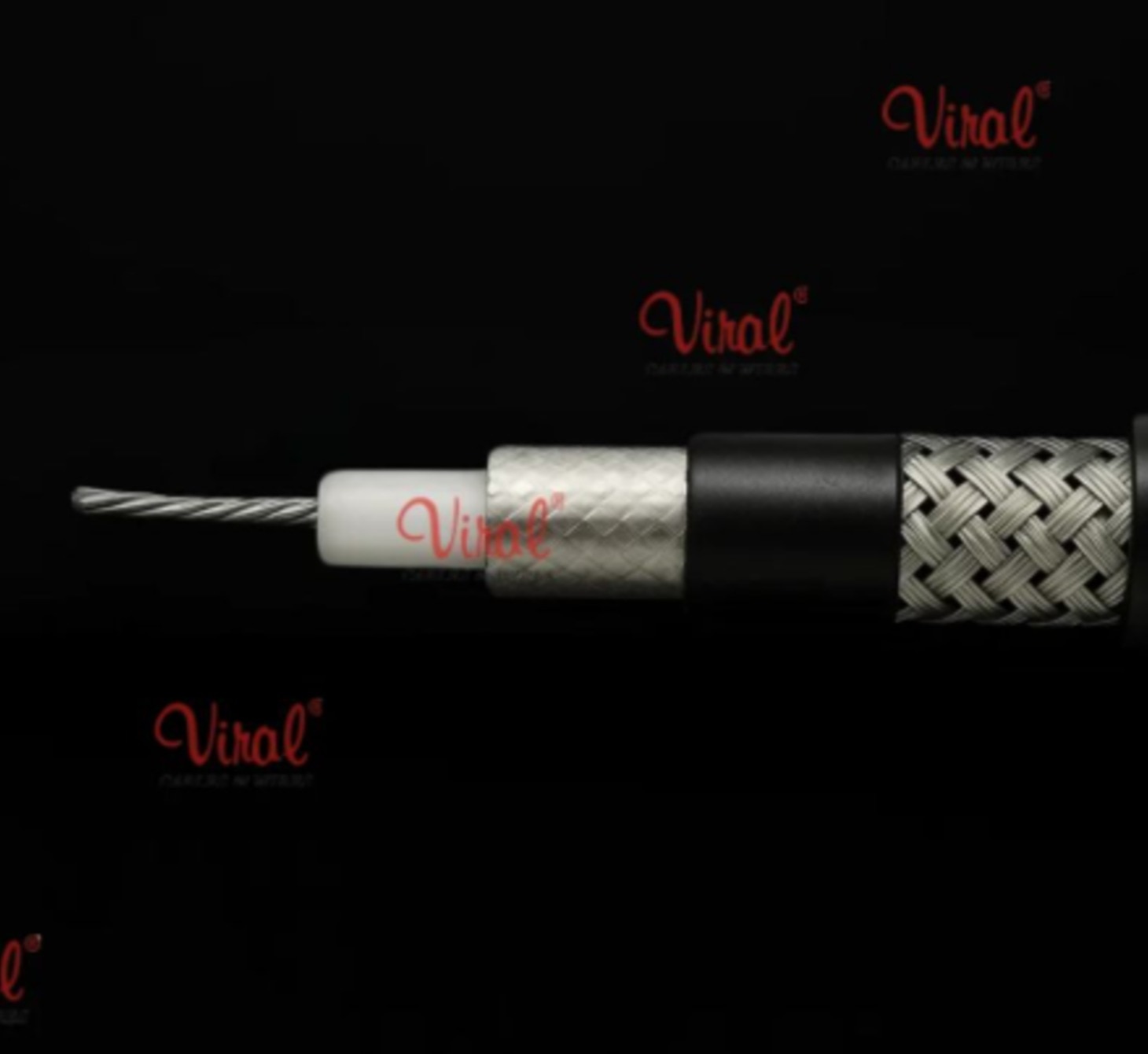
| Switchgear connection | Single-core or three-core XLPE cable with conductor screen, insulation screen, metallic screen and outer sheath | Match the switchgear termination, screen-earth arrangement and fault-current path. |
| Motor circuit | Three-core screened XLPE, armoured where exposed to impact or pulling | Keep phase geometry correct; a screen does not replace a protective earth. |
| Generator connection | Flexible, mechanically protected screened cable for moving or temporary connections | Provide phase identification, neutral or return conductors where required, and strain relief. |
| Battery system | Flexible, fine-stranded copper cable with insulation rated for the battery’s DC voltage and temperature | Do not substitute an AC high-voltage cable without checking DC insulation and fault-current requirements. |
| Fixed distribution route | Screened, armoured XLPE cable with a moisture-resistant sheath | Use the specified glands, joints, bend radius and route protection. |
A single-core cable is not a complete circuit: install the required phase set and return path together, control spacing, and keep power cables away from instrumentation wiring. In Mumbai’s monsoon, keep cut ends capped, off wet concrete and out of floodwater; humidity and salt-laden air can damage exposed screens and terminations before energisation.
Compare materials, temperature limits and current capacity
A copper high voltage cable in Mumbai is not selected by conductor metal alone. Compare the declared continuous conductor temperature, emergency rating, short-circuit withstand, installation method, grouping, ambient or soil temperature, voltage drop and permissible current for that exact route.
| Option | What to compare | What can go wrong |
|---|---|---|
| Copper | Lower resistance and smaller conductor size against cost, weight and termination compatibility | Replacing aluminium with copper without checking lugs, screen bonding and accessories creates a poor connection |
| Aluminium | Larger cross-sectional area, joint compound, torque and oxidation control | The same nominal area does not provide the same resistance or current result as copper |
| PVC | Declared continuous temperature, usually lower than XLPE, plus sheath performance in heat and moisture | A PVC limit suited to panel wiring is not automatically suitable for medium-voltage service |
| XLPE | Continuous, emergency and short-circuit temperatures; insulation and screen construction | A higher thermal limit does not excuse inadequate screen or earth-fault withstand |
| Flexible | Strand class, bending radius, abrasion protection and duty cycle | A flexible test or battery lead is not a screened fixed-distribution cable |
| Fixed installation | Armour, metallic screen, spacing, route heat dissipation and accessories | Grouping or enclosure heat can reduce capacity below a catalogue figure |
Never use a universal ampacity. Request the manufacturer’s table for conductor size, length, phase arrangement, installation, soil thermal resistivity and ambient temperature, then check voltage drop and fault-clearing time.
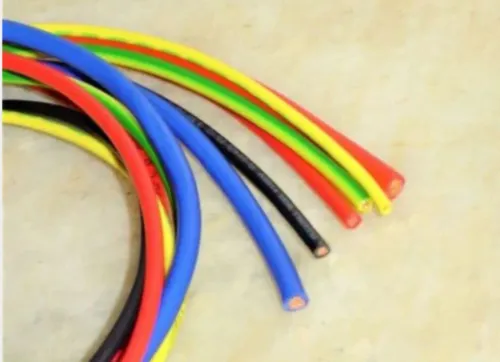
Viral Electronics PVT LTD / Viral Electronics LLP illustrates why this distinction matters: a low-voltage battery or welding cable must not be treated as an 11 kV replacement.
Related product
 | Welding Cables Product Details: Cross-Sectional Area: 50 sq. mm Conductor Material: Copper Sheath Material: HOFR (Heat & Oil Resistant, Flame Retardant) Standards... View product → |
Plan the wet-weather route, installation and commissioning test
Treat the route as unsafe until rain, standing water and nearby live circuits are controlled. Confirm the system’s maximum operating voltage, insulation level and approved test voltage; a cable marked “2 kV” is not automatically suitable for an 11 kV circuit.
Survey the route for flooding, mud, condensation, heat sources, sharp edges, other cables, pulling tension and the manufacturer’s minimum bend radius. Keep cable ends capped and dry, lift the cable off wet concrete, and never drag it through water or force it around a tight corner.
Provide drainage or postpone the work if water can reach a joint or termination.
Use this isolation and installation sequence:
- Identify the correct circuit, isolate every source, lock and tag the isolation points, and prevent remote or automatic re-energisation.
- Prove the detector on a known live source, test the cable for dead, then prove the detector again.
- Discharge and earth the conductors; account for induced voltage from adjacent live circuits and keep the work zone separated from them.
- Install the complete circuit arrangement, not just one single core: maintain phase spacing, identify phases, provide the return path, and separate power from control and instrumentation wiring.
- Prepare joints and terminations exactly as specified. A contaminated screen, poor crimp, trapped void or failed seal can cause partial discharge, tracking or water ingress after energisation.
Before energising, inspect sheath and seals, verify continuity and phase identification, then measure insulation resistance. Add sheath, AC withstand or VLF, tan-delta, or partial-discharge testing only when the cable manufacturer and asset owner specify the method and voltage. Discharge and re-earth after testing; record results before removing the permit.
Inspect, store and quarantine cables after monsoon exposure
A high voltage maintenance cable in Mumbai should be quarantined immediately after exposure to rain, flooding, mud or condensation. Dry it in a controlled area; do not energise it to “test” whether moisture has caused damage.
- Remove from service if the sheath is cut through, blistered, melted, carbonised, crushed, kinked beyond its specified bend radius, or shows exposed insulation, conductor strands, corrosion or tracking.
- Repair only a superficial sheath defect when the cable manufacturer or asset owner approves a named repair method. Replace the cable when the insulation, screen, armour or conductor is damaged.
- Quarantine any cable with a loose, cracked, swollen or contaminated termination; missing end cap; wet gland; failed heat-shrink seal; or visible water inside the sheath or termination.
- Replace or rebuild a joint or termination if screen preparation, crimping, stress-control parts or sealing is uncertain. A factory-length cable does not compensate for a defective end.
- Store accepted cable off wet concrete, with both ends capped, protected from sunlight and standing water, and coiled without exceeding its marked bend limit.
Record the cable identity, exposure, inspection findings and test method. A conductor-resistance pass proves continuity, not insulation dryness or sheath integrity. Failures in insulation resistance, the specified AC withstand or VLF test, tan-delta measurement or partial-discharge test require quarantine; repair the identified defect and retest under the asset owner’s procedure.
Remove the cable if it fails again, shows progressive discharge, or has no traceable test history.
Frequently asked questions
What voltage must you confirm before choosing a high voltage maintenance cable?
Confirm the system’s actual voltage—3.3, 6.6, 11, 22 or 33 kV—then check the cable’s maximum operating voltage, insulation level and withstand ratings.
How do you match cable construction to an industrial maintenance task?
Assess the task’s voltage, movement, bending, mechanical exposure, shielding needs and installation route before selecting the cable construction.
What should you compare when evaluating high voltage cables?
Compare conductor material, insulation type, temperature limits, current capacity, shielding, flexibility and the cable’s required test ratings.
How should you handle cables after Mumbai monsoon exposure?
Inspect the jacket, seals and terminations, perform the specified commissioning tests, and quarantine cables showing moisture ingress or physical damage.