
A 16 mm² welding cable is not automatically suitable for a battery system because its current capacity, voltage drop, sheath construction and terminations depend on the installation. By checking the conductor measurement, environmental exposure, circuit calculation, cable construction and connection method, you can decide whether it fits your Mumbai battery equipment or requires another cable and installation method.
Key takeaways
- Confirm 16mm means 16mm² copper area, not cable outside diameter.
- Use jacket materials and routing suited to Mumbai heat, humidity and salt exposure.
- Calculate ampacity and voltage drop before selecting cable length and size.
- Specify terminals, insulation, bend radius and inspection checks in writing.
What “16mm double insulated” must mean before you compare cables
Here, 16 mm should mean a 16 mm² copper conductor cross-sectional area, not a 16 mm outside diameter. The finished diameter depends on strand count and strand size, insulation thickness, any separator, and the outer jacket, so compare construction drawings rather than guessing from the product name.
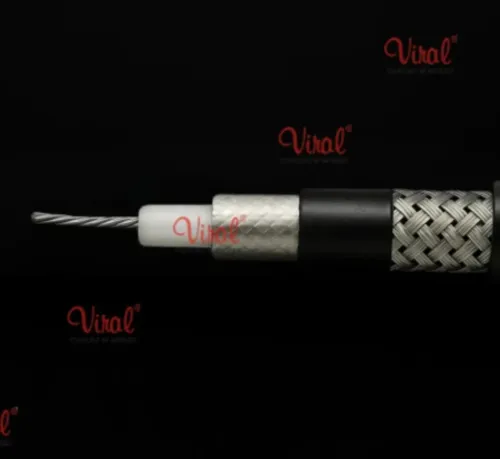
For anyone comparing 16mm double insulated welding cable in Mumbai, genuine double insulation means two distinct protective layers:
| Layer | Function | What to verify |
|---|---|---|
| Primary insulation | Separates copper from the surrounding sheath and prevents conductor-to-conductor or conductor-to-equipment contact | Compound, thickness and rated temperature |
| Outer jacket | Resists abrasion, accidental contact, moisture, workshop handling, and limited heat or chemical exposure | Compound rating for oil, water, sunlight, ozone and chemicals |
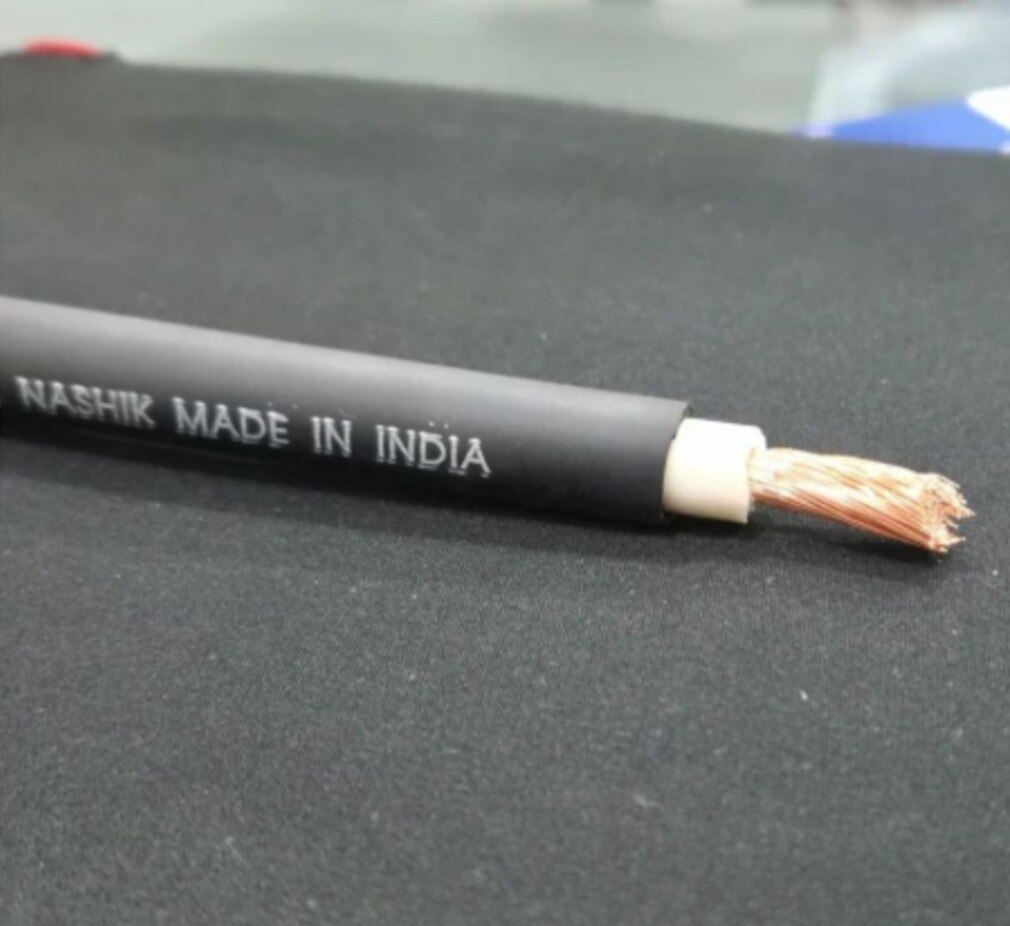
A flexible welding cable is not automatically double insulated. Require the datasheet or construction drawing to identify both a primary insulation layer and a separate outer sheath; one rubber layer alone does not meet that description.
IEC 60245-6 is the reference for rubber-insulated electric cables used with arc-welding electrodes and electrode holders, including flexible welding-cable constructions. Check the stated cable designation and test evidence, because “welding cable” alone proves neither compliance with that standard nor suitability for battery equipment.
Double insulation describes construction, not current capacity, voltage rating, or environmental approval. Before selecting the cable, request its rated voltage, conductor class, temperature range, resistance, minimum bend radius, and separate evidence for the conditions your battery installation will face.
Mumbai exposure conditions that change the jacket and installation choice
Monsoon humidity does not prove that a cable can survive standing water, salt-laden air or battery-room chemicals. For double insulation welding cable battery equipment in mumbai, match the sheath and installation to the actual route, not merely to the word “rubber.”
1. Request separate confirmation of water resistance, oil resistance, UV resistance, ozone resistance, low-temperature flexibility and continuous operating temperature. Rubber insulation alone proves none of these combinations. Check workshop oil, battery electrolyte, cleaning chemicals, sunlight and ozone exposure rather than assuming the jacket tolerates them.
2. Treat standing water as an installation problem, not a reason to buy a thicker cable. Route the cable above wet areas, provide drainage and seal entries and terminations. Outdoor sunlight requires a UV-rated sheath; otherwise, ultraviolet exposure can embrittle the outer layer.
3. Coastal salt deposits or chemical contact require a compatible jacket, sealed terminations and corrosion-resistant plated lugs. Keep copper covered at the crimp so moisture cannot travel into the conductor and raise local resistance.
4. Near an engine, charger or battery enclosure, calculate the cable temperature with surrounding heat and current included. Use physical separation or thermal shielding; prolonged high-temperature routing may require a different cable.
For outdoor storage, keep the coil off wet floors, shield it from sunlight and chemicals, and seal both ends against moisture. A cable that passes a workshop welding test is not automatically suitable for a permanent Mumbai battery installation.
How to prove that 16 mm² fits the battery current and voltage drop
1. Calculate the real load before choosing 16 mm². Record continuous current, peak current, one-way cable length, return length, ambient temperature, cable grouping, enclosure ventilation, duty cycle and termination temperature. A voltage rating up to 100 V does not establish allowable battery current.
2. Calculate resistance from copper resistivity: resistance equals 0.01724 Ω·mm²/m multiplied by total conductor length, divided by 16 mm². Voltage drop equals current multiplied by loop resistance.
A 16 mm² copper pair with 2 m total circuit length has about 2.16 mΩ loop resistance at 20°C: approximately 0.22 V at 100 A and 0.43 V at 200 A, before hot-cable and terminal effects.
3. Recalculate at operating temperature because copper resistance rises about 0.39% per °C near room temperature. Do not reuse a welding-current table as a continuous battery-discharge rating when it is based on pulses or a 60% duty cycle.
For double insulated welding cable 16mm conditions in mumbai, voltage drop can fail an inverter or charger before heating becomes obvious.
4. For parallel cables, calculate each path separately, match lengths and terminations, and protect each branch as the design requires. Place the main fuse close to the battery positive terminal, then verify that the selected fuse, lugs and cable remain suitable for both continuous and peak current.
Where this cable fits beside PVC, superflex and inverter battery cable
Choose by duty, not by the word “welding.” A 16 mm² cable for a charger, inverter, mobile machine or battery interconnect must match current, movement, environment and installation rules.
| Option | Best fit | Main limitation |
|---|---|---|
| 16 mm² PVC battery cable | Standard battery wiring where PVC temperature, flexibility and abrasion limits suit the route | Poor choice for repeated movement, tight bends or harsher heat and oil exposure |
| Single-core superflex battery cable | Repeated movement and tight routing | Confirm its voltage, temperature, abrasion and environmental ratings |
| Inverter battery cable assembly | Short, high-current links needing flexible construction, correctly sized lugs and low voltage drop | Assembly quality, lug fit and length determine performance |
| Double-insulated welding cable | Robust, flexible leads and mobile equipment | Welding designation alone does not prove battery suitability or permanent-installation approval |
Compare conductor class, strand flexibility, insulation compound, rated voltage, continuous temperature, resistance, minimum bend radius, oil performance, UV performance, termination method and intended duty. For 16mm welding cable applications in mumbai, those checks separate a suitable charger lead from an unsuitable fixed cable.
Do not use welding cable above its stated voltage rating, in fixed wiring controlled by a project standard, or in hazardous locations without the required approval. Reject it where the design specifies flame-retardant, low-smoke or halogen-free cable unless documented compliance is provided.
Use a larger conductor when current or voltage-drop calculations require it; flexibility cannot compensate for an electrically undersized cable.
How to specify, terminate and inspect the finished battery cable
A reliable assembly starts with a purchase specification, not the product title.
For a 16mm double insulated welding cable in mumbai, state 16 mm² conductor area separately from finished outside diameter, then request conductor class, insulation compound, outer-sheath properties, rated voltage, temperature range, resistance, minimum bending radius and applicable test standard, such as IEC 60245-6 where relevant.
1. Ask the supplier to state the finished diameter from the actual construction. If the quotation or test sheet omits minimum bend radius, request the value; do not invent one.
2. Select lugs for both the 16 mm² conductor and the battery stud diameter. Confirm lug material and plating, then use the matching die and the manufacturer’s approved crimp method.
3. Inspect the finished crimp for correct barrel closure, conductor insertion and undamaged insulation. Add pull-out testing when the project specification requires it.
4. Keep copper fully covered at the crimp end, seal the termination against monsoon moisture, provide strain relief and support the cable against vibration. Protect it from sharp edges and leave a straight transition instead of forcing a bend immediately behind the lug.
5. Apply the specified terminal torque with a controlled tool, record it where required and place the positive fuse close to the battery. Verify polarity before energising.
Viral Electronics PVT LTD / Viral Electronics LLP can help prepare a specification-based quotation, but your purchase order must name every construction, electrical, environmental and termination requirement.
Related product
 | Welding Cables Double Insulated Welding Cable 16mm Product Details: Cable Size: 16 sq. mm Conductor Material: Copper Cable Grade: Welding Cable Voltage Rating: Up to 100 V Insulation Material: Rubber... View product → |
Frequently asked questions
What does 16mm mean on a double insulated welding cable?
It should identify a 16mm² copper conductor cross-sectional area, not a 16mm outside diameter. Confirm strand construction, insulation thickness and finished diameter on the drawing.
Which Mumbai conditions affect battery cable selection?
Heat, humidity, monsoon water, oil, abrasion and coastal salt exposure affect jacket choice, routing, sealing and inspection. Match the outer jacket and installation method to the actual equipment location.
How do you prove that 16mm² cable is suitable for battery equipment?
Check the conductor ampacity for the installation, then calculate voltage drop using battery current, one-way cable length, the complete positive-and-negative circuit length and conductor resistance. Increase the size when the calculated drop exceeds the equipment limit.
What should you specify when ordering double insulated welding cable for batteries?
State 16mm² copper area, strand construction, insulation and jacket materials, voltage rating, temperature range, length, colour, bend requirements, terminal sizes and inspection documents. Verify crimp quality, polarity, insulation damage and terminal tightness before commissioning.