
A “high-voltage cable” request is too vague for a safe, comparable quotation. You will be able to identify the cable’s test or installation duty, specify its electrical and mechanical requirements, check supplier documents, and compare Mumbai sources without choosing on voltage label or price alone.
Key takeaways
- Separate temporary test leads from cables intended for permanent installation.
- State operating voltage, test voltage, frequency and installation conditions in the quote request.
- Compare conductor size, insulation, shielding, sheath and termination details line by line.
- Ask the Mumbai supplier for test reports, traceability and compatibility evidence.
Is a single-core cable for testing, permanent power, or both?
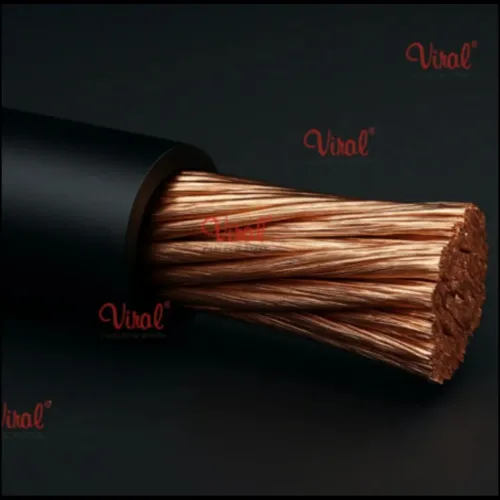
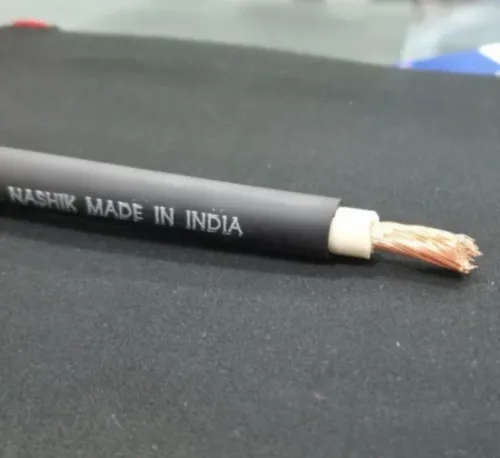
A single-core cable is not automatically a test lead or a permanent power cable. Copper versions serve automatic capacitance testing, hipot testing, transformer testing, capacitor-bank testing, switchgear testing, and laboratory connections.
- Choose a flexible temporary lead for instrument connections, repeated setup changes, and short-duration high-voltage tests.
- Choose a fixed-installation cable for continuous power transmission, where the design includes a stranded conductor, conductor screen, insulation, metallic screen, sheath, matched terminations, and installation calculations.
- Request a configuration approved for both duties only when the manufacturer confirms its flexing limits, voltage rating, screen arrangement, termination method, and permissible test use.
A single insulated conductor still needs a defined return path. The high-voltage lead, return lead, earth, enclosure, and nearby metal must have controlled spacing; poor routing concentrates electrical stress, increases flashover risk, and can make test readings unsafe or unreliable.
For a permanent cable, specify conductor and insulation screens, metallic screen bonding, sheath, terminations, ampacity, bending radius, and the installation arrangement. A flexible test lead may use a different construction and is not automatically suitable for buried, clipped, or energised service.
Tell the supplier the equipment, maximum test voltage, duty duration, lead length, return-path arrangement, and whether the cable will flex. Ask for a test lead, a fixed-installation cable, or written approval for both—not merely a “single core high voltage cable.”
How should you specify the voltage rating before requesting a quote?
A cable’s selection is controlled by the highest specified electrical stress, especially the equipment’s test voltage, not merely its normal operating voltage. Request the complete U0/U(Um) designation, such as 6.35/11 (12) kV, rather than accepting “11 kV cable” as a complete specification.
Record these values separately before asking for a quote:
- Normal operating voltage
- Power-frequency test voltage
- Impulse voltage
- Expected transient overvoltage
- Test duration
- Required safety margin
| Nominal label | What it means in practice | What it does not prove |
|---|---|---|
| 2 kV | Suitable only for a defined lower-voltage duty | It does not qualify for a 2 kV impulse or prolonged test without evidence |
| 10 kV | Provides a higher insulation class for specified test circuits | It does not automatically withstand every 10 kV waveform or duration |
| 33 kV | Addresses medium-voltage equipment and system insulation duties | It does not define screen, sheath, impulse, or installation performance |
| 100 kV | Indicates a high test-voltage application | It does not equal a 100 kV permanent transmission-cable qualification |
For Indian XLPE cables, IS 7098 Part 2 covers 3.3 kV through 33 kV; IS 7098 Part 3 covers 66 kV through 220 kV. A test lead’s voltage rating is not interchangeable with a permanent transmission cable’s qualification, which includes construction and installation evidence.
That distinction matters when sourcing a copper high voltage cable in Mumbai.
Which construction and insulation details make quotations comparable?
A comparable RFQ names the complete cable construction, not merely “single-core copper high voltage cable.” Request:
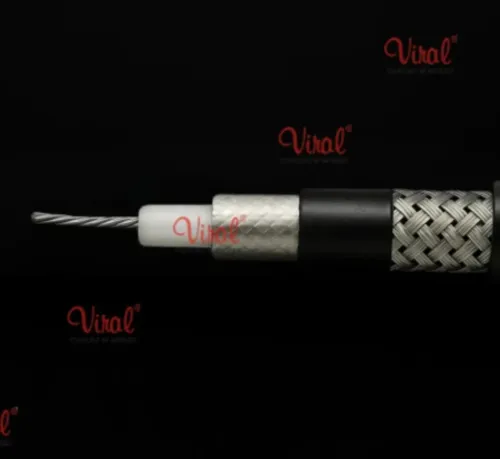
- Copper cross-sectional area, conductor class, DC resistance at the stated temperature, insulation material and thickness, conductor and insulation screens, metallic screen or braid, outer sheath, outer diameter, capacitance, minimum bending radius, operating temperature, short-circuit rating, drum length, and termination type.
- The applicable standard, U0/U(Um) rating, installation formation, and intended test or permanent-duty application.
The same nominal copper area can produce different resistance because strand construction, compaction, tolerance, and conductor class differ. Ask for IEC 60228 or equivalent Indian-standard resistance values. Semiconductive conductor and insulation screens are functional electrical layers: they control field distribution and interface stress.
A discontinuous screen or badly prepared termination concentrates electric stress and can cause partial discharge or premature failure.
| Insulation | Heat | Flexibility and repeated flexing | Moisture and chemicals |
|---|---|---|---|
| PVC | Moderate | Limited for repeated flexing | Good moisture resistance; chemical performance depends on formulation |
| XLPE | High continuous temperature | Suited to fixed installation, not continual flexing | Good moisture resistance; verify chemical exposure |
| Silicone rubber | High temperature range | Excellent flexibility and repeated flexing | Strong moisture performance; check mechanical damage and oils |
| Fluoropolymer | Very high temperature and chemical resistance | Flexible in specialised constructions | Excellent chemical resistance; usually costs more |
Copper gives compact equipment connections and higher conductivity per area; aluminium reduces mass and often material cost. Compare complete installed cost—cable, supports, joints, terminations, losses, voltage drop, and labour—not price per metre.
How do you verify compatibility with test equipment and the installation?
1. Match the cable to the instrument before ordering. Record the connector type, termination geometry, output current, maximum lead length, measured cable capacitance, permitted cable configuration, and the manufacturer’s stated limits.
For automatic capacitance-test connections, the equipment manual is the controlling document; exceeding its lead-length or capacitance limit can produce a false result or overload the source.
2. Draw the complete test circuit. Show lead routing, return-path placement, earth connection, enclosure clearances, and screen bonding. A single core high voltage cable still needs a defined return path, and placing that path or the screen incorrectly can increase electric-field stress, induced voltage, or touch hazard.
3. For permanent AC service, require the supplier to identify whether ampacity assumes trefoil or flat formation, touching or spacing, and the actual conductor temperature, grouping, soil, and burial conditions. Specify single-point bonding, both-end bonding, or cross-bonding, then request touch-voltage, sheath-loss, and heating calculations.
Check armour: ferromagnetic steel around an individual AC core can add heating and losses.
4. Specify matching terminations, joints, connectors, stress-control parts, and earthing accessories against the cable’s conductor size, insulation diameter, screen, sheath, and voltage class. For XLPE installation, obtain the project-approved AC or VLF commissioning procedure; do not automatically replace it with a DC test.
Ask the supplier to confirm every accessory and test limit in writing before purchase.
Where can you buy a Mumbai cable, and what should the supplier prove?
A reliable purchase starts with an evidence request, not a catalogue label. Ask every one core copper high voltage cable supplier in Mumbai for an itemised quotation that identifies the conductor size and class, resistance, insulation and screen construction, sheath, U0/U(Um) rating, standard, drum length, termination options, and intended test or installation duty.
| Document | What to request | What it proves |
|---|---|---|
| Quotation | Construction, rating, length, terminations, duty | Whether offers are technically comparable |
| Routine and sample records | Conductor resistance, high-voltage withstand, partial discharge where applicable, sheath tests, dimensions, standard revision | Whether each drum meets its stated design |
| Type-test evidence for 66 kV and above | Partial discharge, power-frequency voltage, impulse, heating-cycle, and sheath tests | Whether the complete cable design is qualified |
Check that certification or BIS authorization covers the exact voltage range, construction, copper conductor, and factory location. A broad certificate for “high-voltage cable” does not prove approval for your cable.
Put these details in the purchase order:
- Drum dimensions, total mass, required length, and delivery access
- Sealed cable ends for transport and storage
- Drum serial or batch identification linked to test records
- Permitted joints and approved termination type
- Applicable standard and revision
Ask the high voltage copper cable supplier to state installation assumptions if it quotes current rating, including formation, spacing, temperature, soil conditions, and screen bonding.
Mumbai buyers can evaluate Viral Electronics PVT LTD / Viral Electronics LLP for a copper high voltage cable in Mumbai using this same evidence-based process, rather than choosing from a product name alone.
Related product
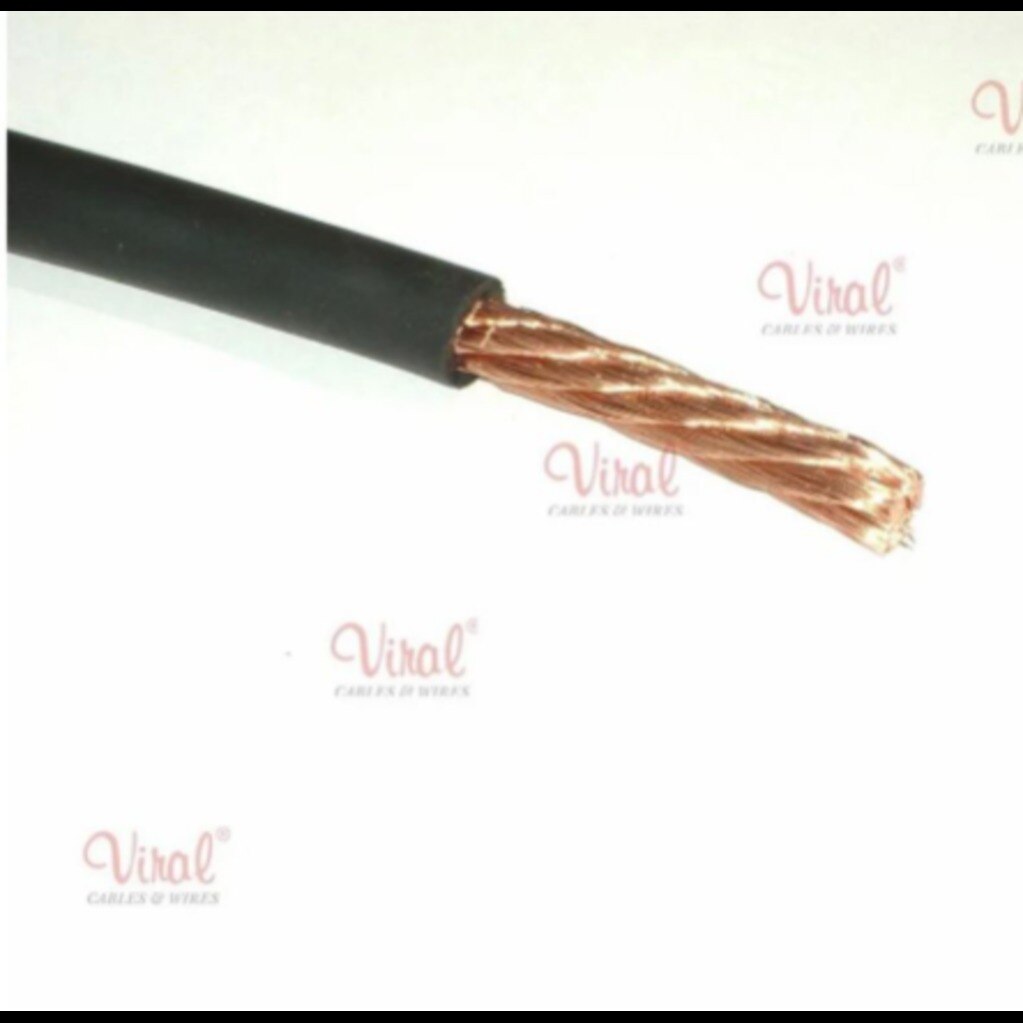
 | HV Cables 1 Core Copper High Voltage Cables Number of Cores 1 Core Conductor Material Copper Insulation Material PVC Min Voltage 2 kV Max Voltage 100 kV Type High Voltage We at viral... View product → |
Frequently asked questions
Is a single-core high-voltage cable suitable for testing and permanent power?
Not automatically. Test leads need flexibility, insulation suited to repeated handling and compatible terminations; permanent power cables need construction, rating and installation approvals suited to continuous service.
What voltage details should you provide when requesting a quote?
State the operating voltage, maximum test or withstand voltage, AC or DC use, frequency, required length and whether the rating applies between conductor and screen or conductor and ground.
Which construction details make quotations comparable?
Compare copper conductor area and flexibility, insulation material and thickness, screen or shield, outer sheath, diameter, temperature range, minimum bend radius and supplied terminations.
How do you check cable compatibility with test equipment and an installation?
Match the cable voltage and insulation ratings to the instrument output and installation duty. Check connector type, conductor size, bend radius, earthing arrangement, clearances and the equipment manufacturer's cable requirements.
What should a Mumbai high-voltage cable supplier prove before you buy?
Ask for a datasheet, conductor and insulation specifications, routine or batch test reports, traceability details, applicable standard references and evidence that the proposed terminations match your equipment.