
The choice between 0.75 sq mm and 1 sq mm depends on more than the label: current, complete circuit length, voltage drop, installation conditions and termination all affect the result. By the end, you will be able to compare the two sizes, identify suitable use cases and request the test and rating information needed for a sound Mumbai purchase.
Key takeaways
- Do not assume 1 sq mm carries 33.3% more current than 0.75 sq mm.
- Calculate load current and voltage drop before selecting the cable size.
- Use installation method, ambient temperature and grouping when checking ampacity.
- Verify conductor resistance, insulation rating, test reports and batch traceability.
What changes when you move from 0.75 sq mm to 1 sq mm?
The extra 0.25 sq mm makes a real voltage-drop and heating difference, but it does not make the cable’s allowable current 33.3% higher. For 0 point 75 and 1 sq mm single core cables in Mumbai, the installation method and manufacturer’s ampacity table still decide safe current.
| Size | Copper area | Idealised DC resistance at 20°C | Same-current effect |
|---|---|---|---|
| 0.75 sq mm | Reference | 23.3 mΩ/m | Higher voltage drop and I²R heat |
| 1 sq mm | 33.3% more | 17.5 mΩ/m | About 25% lower resistance, drop and heat |
These resistance figures use ideal copper values before the product standard’s maximum-resistance allowance.
In a 20 m one-way, 5 A, two-conductor run, calculate both outgoing and return conductors: 2 × 20 × 5 × 0.0233 gives approximately 4.66 V for 0.75 sq mm, while 2 × 20 × 5 × 0.0175 gives 3.50 V for 1 sq mm.
On a 230 V supply, that 1.16 V saving is about 0.50 percentage points.
The lower resistance helps motors, LED drivers and other voltage-sensitive loads, yet cross-sectional area alone cannot set allowable current. Conduit fill, grouping, ambient temperature, insulation rating and installation method control ampacity. Copper resistance rises about 19.6% from 20°C to 70°C, so final calculations must use the cable’s declared maximum resistance and actual conductor temperature.
How do you calculate the required size before choosing a cable?
Calculate the circuit’s worst credible demand and its two-way voltage drop before comparing 0.75 sq mm with 1 sq mm. For DC and single-phase circuits:
ΔV = 2 × one-way length × current × resistance per metre
The factor 2 includes the outgoing and return conductors. Omitting the return conductor can halve your calculated drop and produce an undersized choice.
| Input | Use in the calculation | Consequence |
|---|---|---|
| Load current | Normal operating amperes | Establishes steady voltage drop and heating |
| Starting current or inrush | Motor, transformer, lamp or electronic power-supply peak | Prevents startup failure and nuisance tripping |
| Cyclic overload | Repeated high-load periods | Tests heating over the actual duty cycle |
| Voltage-sensitive equipment | Controls, instruments, electronics or motors | May require a lower voltage-drop limit |
Compare the calculated drop with the project limit. On a 230 V supply, 1 V equals about 0.43%; a 5 V drop is about 2.17%. Use the manufacturer’s declared maximum resistance, not nominal copper resistivity, and account for terminal connections.
Current-carrying capacity cannot come from cross-sectional area alone. Obtain the manufacturer’s ampacity table for the actual insulation temperature rating, installation method, ambient temperature, number of loaded conductors, grouping, conduit fill and enclosure conditions. A cable that passes the steady-current calculation can still fail under starting current or cyclic heating.
Check protective-device coordination separately. The breaker or fuse must protect the cable against overload and fault current; choosing 1 sq mm does not make an incorrectly rated protective device safe. This is the basis of defensible single core cable size selection in Mumbai.
When is 0.75 sq mm or 1 sq mm the better practical choice?
0.75 sq mm is defensible for a specifically engineered low-current circuit, flexible appliance lead, internal equipment wiring, pendant, or control connection after checking current, voltage drop and termination.
It is not an automatic substitute for the commonly used 1.5 sq mm copper minimum for lighting and fan final circuits under Indian installation practice, subject to the applicable edition of IS 732 and project requirements.
| Route or application | Better practical choice | Reason |
|---|---|---|
| Short, low-current control or pendant run | 0.75 sq mm | Low current and short length limit voltage drop |
| Fan or equipment circuit | 1 sq mm only for an engineered low-current connection | Check starting current, heat and terminals; fixed final circuits commonly require 1.5 sq mm |
| Battery or instrumentation connection | Either, after calculation | Confirm voltage sensitivity, peak current and return-path length |
| Long panel-to-load run | 1 sq mm | Lower resistance gives greater voltage-drop margin |
For a 0.75 sq mm cable choice in Mumbai, use 0.75 sq mm only when the design documents identify the application and installation conditions. Choose 1 sq mm when the route is longer, the cable flexes repeatedly, the load is voltage-sensitive, or heat and conductor grouping are uncertain. It remains subject to an ampacity check.
Stranded construction provides flexibility, not a larger conductor. A flexible 1 sq mm cable still needs ferrules, terminals, lugs and crimping tools matched to its conductor class and size. It is not automatically suitable for fixed wiring.
A 1 sq mm flexible cable with a poorly crimped termination can overheat faster than a correctly terminated smaller conductor. Check the connector and tightening method before selecting either size.
What technical evidence should you verify before accepting either cable?
“1 sq mm heavy duty cable in Mumbai” is a marketing phrase unless the quotation gives measurable limits. Check voltage grade, insulation material, temperature rating, conductor class, maximum DC resistance, insulation thickness, test standard and product marking.
Inspect the cable print, then request a test certificate or specification sheet showing:
- Copper conductor confirmation; exclude aluminium and copper-clad material unless specifically approved.
- Declared maximum conductor resistance, conductor class, insulation voltage rating and temperature rating.
- Insulation thickness, test results, current edition of the applicable standard, compliance marking, batch number and manufacturer identification.
- Drum or coil length, batch identification and the matching test documentation.
If the document cites IS 694:2010, it is intended to establish construction, dimensions, electrical tests, mechanical tests and marking for PVC-insulated cables within its stated voltage scope. It is not a universal ampacity table: allowable current still depends on installation conditions and manufacturer data.
| Evidence | What it confirms | What it does not confirm |
|---|---|---|
| 1 sq mm marking | Nominal conductor area | Identical resistance or construction |
| Maximum DC resistance | Voltage-drop performance at the declared limit | Safe current in every installation |
| Insulation and voltage rating | Electrical insulation capability | Ampacity without temperature and installation data |
| Test certificate and batch number | Traceability and recorded test results | That an unmarked replacement matches the tested cable |
Two cables marked 1 sq mm can therefore differ in resistance, strand construction and usable performance. Reject a quotation that supplies only “heavy duty” and a size.
What Mumbai installation and buying details can change the decision?
Mumbai humidity, monsoon exposure, coastal pollution and heat in crowded conduits do not create a special ampacity allowance for 0.75 or 1 sq mm cable. They make dry, sealed terminations, suitable IP-rated enclosures, water-ingress protection, UV protection on exposed sections, compatible glands and corrosion control more important.
Put these details on the quotation so the supplier can assess the actual installation:
- Complete route length, including the return conductor where applicable
- Supply voltage and continuous load current
- Installation method: conduit, trunking, tray, panel wiring or flexible connection
- Number of loaded conductors, conduit or trunking fill, grouping and ambient conditions
- Required movement or repeated-flexing capability
- Required delivery length, whether cut lengths, coils or drums
Ask for a declaration that the conductor is copper, then compare maximum DC resistance, insulation material and thickness, voltage rating, temperature rating, conductor class and applicable test standard. “Heavy duty” alone proves none of these. Derating must follow the actual ambient temperature, enclosure and grouping conditions, not Mumbai’s name on the purchase order.
Check the complete termination before approving either size. The connector, ferrule, lug, tightening method and crimp must suit the conductor’s actual class and size; a fine-stranded conductor can be damaged by an unsuitable screw terminal. A loose or oxidised joint adds local resistance and heat, causing failure even when the cable itself is adequate.
Viral Electronics PVT LTD / Viral Electronics LLP can be useful when you need these particulars, test documents and cut or coil lengths recorded in the quotation.
Related products
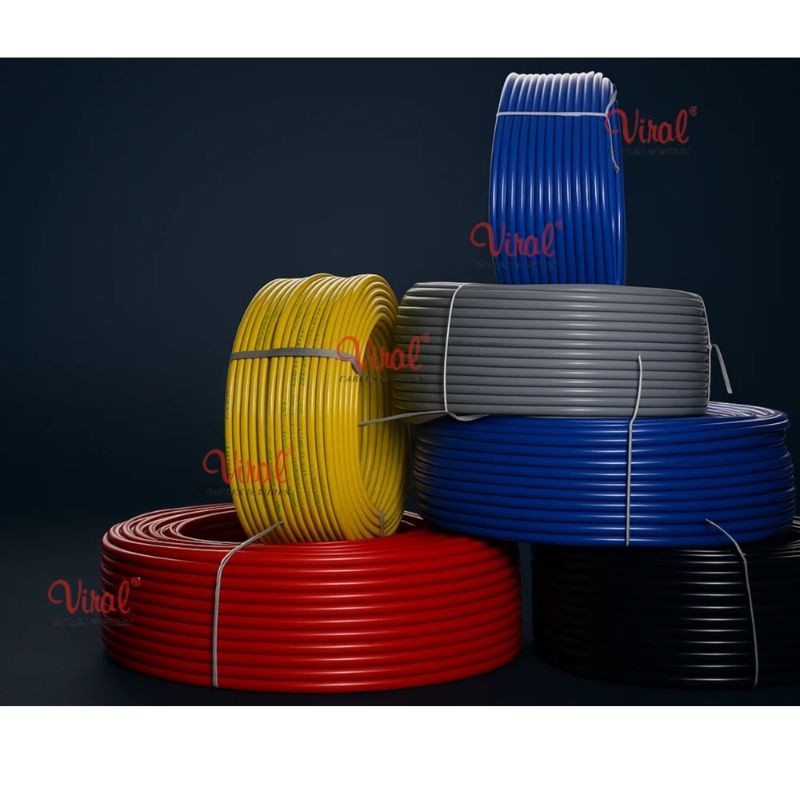 | House and Electric Panel Wires 1 Sq mm Single Core Heavy Duty Flexible Cables Conductor Type Stranded Material Copper Diameter see specification sheet Insulation Material PVC Standards IS 694/2010 Min Nominal Size 0.5 sq.mm Max... View product → |
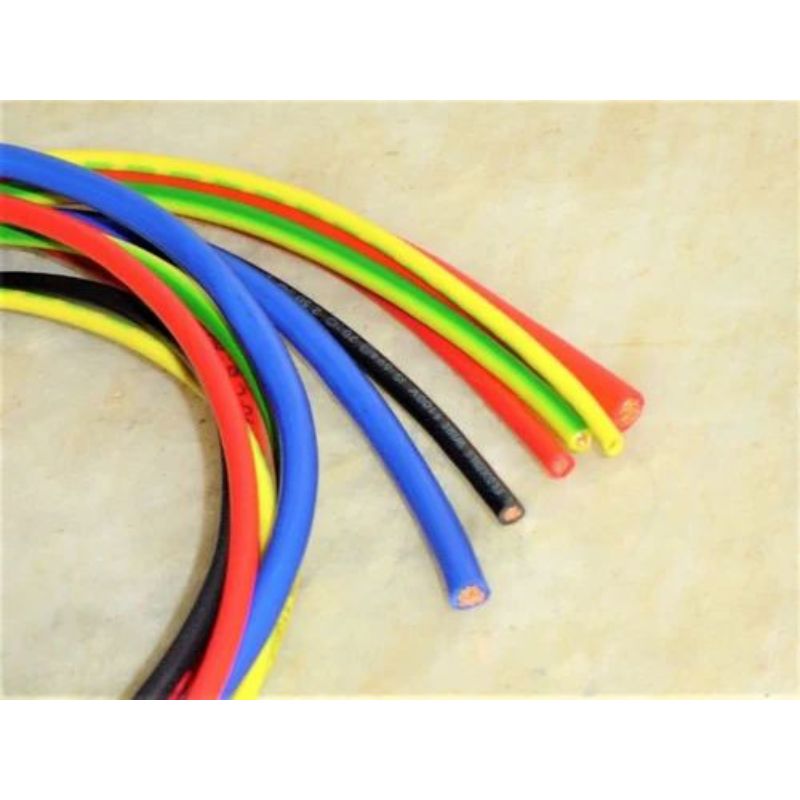 | House and Electric Panel Wires Wire Size 0.75 sqmm Insulation Material PVC Roll Length 180 m Number Of Cores Single Core Conductor Copper Suitable for Buildings, Construction,... View product → |
Frequently asked questions
What changes when you move from 0.75 sq mm to 1 sq mm?
A 1 sq mm conductor has a larger cross-sectional area and lower resistance, which can reduce voltage drop and heating. Its allowable current is not automatically 33.3% higher; use the manufacturer’s ampacity table for the installation method.
How do you calculate the required size before choosing a cable?
Find the design current from the load’s wattage, voltage and power factor, then check voltage drop over the cable length. Compare the result with the manufacturer’s current-carrying capacity after applying temperature, grouping and installation-method factors.
When is 0.75 sq mm or 1 sq mm the better practical choice?
Choose 0.75 sq mm when the design current, voltage drop and mechanical demands fit its documented rating. Choose 1 sq mm when its lower resistance, longer run, starting voltage drop or added mechanical margin justifies the extra material.
What technical evidence should you verify before accepting either cable?
Request the applicable standard, conductor resistance at 20°C, insulation material and voltage rating, dimensions, test certificate, batch number and manufacturer’s ampacity data. Confirm that the delivered markings match the documents.
What Mumbai installation and buying details can change the decision?
Account for high ambient temperatures, crowded conduits, long cable routes, damp or corrosive locations, voltage-drop limits and local stock conditions. Compare the delivered cable’s batch documents and test results, not only its printed size.