
A high-voltage cable can retain a dangerous charge after isolation, and an intact outer jacket does not prove that its insulation, joints, screen, or terminations are sound. By following a controlled inspection sequence, taking comparable electrical measurements, and interpreting defects in context, you can decide whether the cable is fit for further service, needs specialist testing, or must be withdrawn.
Key takeaways
- Confirm isolation, discharge stored charge, and test for induced voltage before touching.
- Inspect the jacket, route, joints, screens, and terminations for visible damage.
- Compare insulation and bonding measurements with baseline records, not one result alone.
- Remove the cable from service when evidence shows unsafe insulation or termination damage.
Make the circuit safe before touching the cable
Before beginning any high voltage cable inspection, obtain the circuit owner’s confirmation that every source is de-energised. Do not rely on a switch position or control-room indication: a long cable can retain capacitive charge, and a single-core cable can carry induced voltage from a nearby energized circuit.
- Identify the complete circuit, including the conductor, insulation, metallic screen or sheath, oversheath, joints, terminations, bonding arrangement, route, and operating history.
- Isolate every supply and backfeed, then apply lockout and tagout. Include connected transformers, capacitors, generators, parallel circuits, and remote sources.
- Prove the rated voltage detector on a known energized source, test the cable circuit, and prove the detector again on the known source. Use equipment rated for the circuit voltage.
- Discharge the conductor and screen with approved equipment, allowing enough time for stored energy to decay. Treat the cable as energized until the test proves otherwise.
- Apply protective earths to the conductor, screen or sheath, and other required phases. Keep earths in place while inspecting, unless an authorised test procedure requires their controlled removal.
- Wear the specified arc-rated and voltage-rated PPE, and establish barriers against accidental re-energisation. Use a discharge lead, voltage detector, suitable earth leads, and insulated tools.
Keep test equipment and accessories isolated as the procedure requires; otherwise, an attached transformer or termination can distort the result. These controls protect you before any decision about high voltage cable condition begins. Never handle or test the cable until the owner confirms de-energisation and released stored charge.
Inspect the route, jacket, joints, and terminations
Cuts, cracks, swelling, flattening, exposed copper, and heat discoloration are physical warning signs, not cosmetic faults. During a high voltage cable inspection, trace the entire route and examine every joint and termination; a sound-looking jacket does not prove that the primary insulation is healthy.
Check for these defects:
- Route: unsupported spans, a bend tighter than the specified minimum radius, abrasion against trays, rodent damage, chemical attack, water pooling, or signs of movement.
- Jacket and metallic sheath: cuts, splits, blisters, corrosion, moisture tracking, loose screen connections, or a damaged sheath bond.
- Joints: swelling, compound or oil leakage, cracked housings, displaced stress-control parts, contaminated insulation surfaces, and overheated or corroded hardware.
- Terminations: tracking marks, carbon deposits, cracked stress cones, loose lugs or screen bonds, discoloured insulation, and failed seals.
| Physical finding | What it suggests | Immediate decision |
|---|---|---|
| Deep jacket cut or exposed copper | Mechanical damage and possible moisture path | Stop and investigate before service |
| Bulging joint or leaking compound | Internal deterioration or failed sealing | Keep out of service pending joint assessment |
| Black tracking marks or carbon deposits | Surface discharge or contamination | Test and inspect the termination |
| Loose screen bond or corroded connection | Uncontrolled sheath voltage and poor fault-current path | Repair, then verify bonding |
| Clean, intact oversheath | No visible external defect only | Do not treat it as an insulation pass |
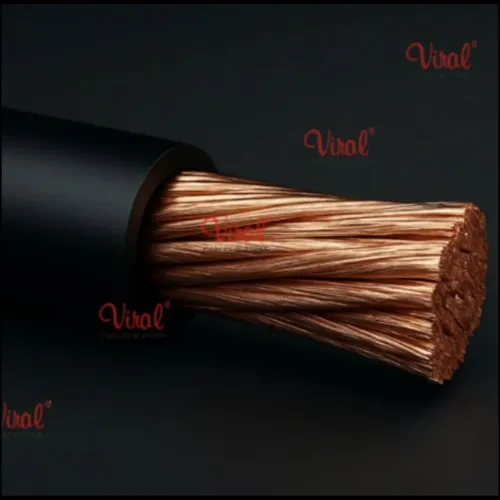
Record photographs, locations, and dimensions. A one core copper high voltage cable can fail at an interface while its conductor remains physically intact.
Take electrical measurements without overreading one result
Select measurements for high voltage cables for condition checks by matching each test to the defect it can expose. One insulation-resistance reading cannot certify high voltage cable condition.
Temperature, cable length, moisture, surface leakage, test duration, and connected accessories affect it; a high value can coexist with a local defect, while a low or changing value requires investigation rather than an automatic fail.
| Measurement | What it tells you | How to use it |
|---|---|---|
| Conductor continuity and DC resistance | Broken strands, wrong conductor size, poor joints, or high-resistance connections | Use four-wire measurement where practical; correct to a common conductor temperature and compare with the manufacturer’s value and earlier readings |
| Insulation resistance | General leakage screening | Record test voltage and duration; do not treat one value as proof of insulation health |
| Screen or sheath continuity | Whether the electric-field control and fault-current path remain continuous | Investigate discontinuity and possible touch-voltage risk |
| Screen or sheath insulation to ground | Sheath damage, moisture ingress, or unintended grounding | Isolate accessories and external equipment before testing |
| VLF tan-delta | Widespread moisture-related aging or water-tree deterioration | Interpret cable type, age, length, temperature, frequency, stabilisation, and trend together |
| VLF withstand | Failure or survival at the specified test condition | Treat the result as go-or-no-go, not as remaining-life evidence |
Record the cable and accessory identity, bonding arrangement, load, conductor temperature, instrument and calibration status. Trend the same method over time; unrelated test voltages, frequencies, and temperatures can create a false change. Resistance alone cannot reveal water treeing, partial discharge, or general insulation aging.
Use diagnostic tests for hidden insulation and bonding problems
A high insulation-resistance reading does not clear a cable with a defect at a joint, termination, or insulation interface.
Use advanced high voltage cables for condition checks when visual evidence is normal but readings are declining, unstable, temperature-corrected values disagree with the baseline, or the cable has suffered moisture ingress, overheating, switching events, or repeated trips.
- A sheath or oversheath test finds jacket pinholes, screen-to-earth leakage, and damage that allows water to reach the insulation. Check screen continuity and bonding currents separately; an incorrect single-point or both-end bond can create circulating current, overheating, or dangerous induced voltage.
- Tan-delta testing measures dielectric loss across the insulation. Rising loss or an abnormal trend supports investigation for moisture, contamination, water-treeing, or general aging that a resistance test can miss.
- Partial-discharge testing detects localized electrical activity in voids, contaminated interfaces, joints, and terminations. Record the discharge magnitude, inception and extinction voltages, phase pattern, and location when the instrument supports it.
Select the test voltage, frequency, duration, and acceptance criteria from the cable standard, asset-owner procedure, and test-equipment standard. Do not use an indiscriminate DC high-potential test on XLPE as a substitute for diagnosis; trapped charge can distort results or stress aged insulation.
For copper high voltage cable maintenance, trend the same method with cable identity, length, load, conductor temperature, bonding arrangement, instrument calibration status, and accessory details. A comparable trend reveals deterioration more reliably than unrelated tests.
Record the evidence and decide whether the cable can remain in service
A defensible decision links every finding to the same cable, operating state, and test method. Do not mark a cable “good” because one insulation-resistance result is high.
Record:
- Exact cable, conductor, insulation, sheath, joint, and termination identity
- Conductor resistance, insulation resistance, sheath-test result, and test duration
- Tan-delta or partial-discharge data where applicable
- Conductor and ambient temperature, load, and operating history
- Bonding arrangement, test voltage, instrument serial number, and calibration status
- Defects found, photographs, locations, corrective work, and the person approving the decision
Compare resistance with the manufacturer’s value after correcting it to a common conductor temperature. Trend each measurement against previous results taken by the same method; values from different temperatures, frequencies, or test voltages do not form a reliable trend.
A falling insulation-resistance value, rising partial discharge, sheath failure, damaged termination, or unstable trend requires investigation under the asset owner’s criteria.
Keep the cable in service only when safety defects are absent, results remain within documented limits, and no adverse trend needs immediate action. Otherwise, define a restriction, repair, retest, or replacement date instead of writing “monitor.”
For copper high voltage cable maintenance, Viral Electronics PVT LTD / Viral Electronics LLP can use this recorded identity and service history to match a replacement to the actual circuit rather than relying on a catalogue description. That preserves a useful baseline for the next high voltage cable condition check.
Related product
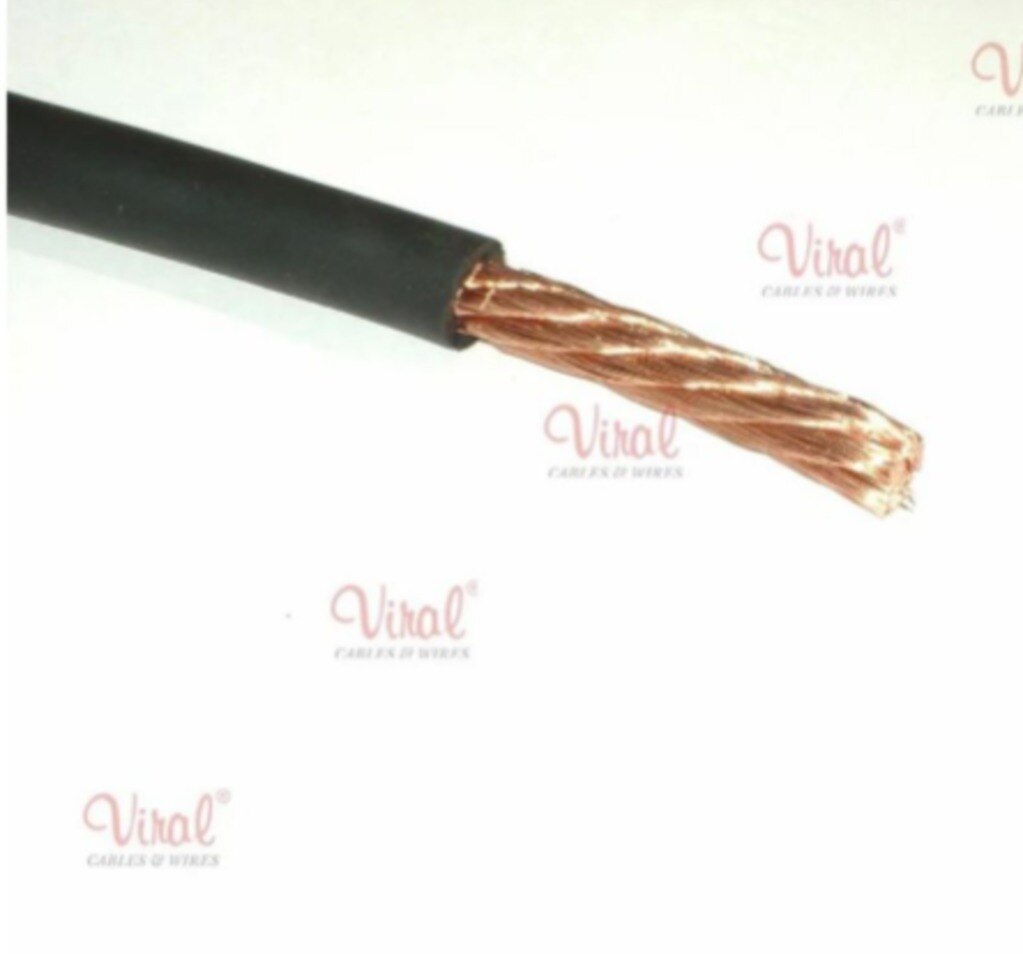
 | HV Cables 1 Core Copper High Voltage Cables Number of Cores 1 Core Conductor Material Copper Insulation Material PVC Min Voltage 2 kV Max Voltage 100 kV Type High Voltage We at viral... View product → |
Frequently asked questions
How do you make a one-core copper high-voltage cable safe to inspect?
Obtain the circuit owner’s confirmation that every source is de-energised, isolate the circuit, discharge capacitive charge, apply the approved earths, and test for induced voltage before touching the cable.
What should you inspect on a one-core copper high-voltage cable?
Inspect the cable route, jacket, supports, joints, screens, bonding connections, glands, stress-control components, and terminations for damage, overheating, contamination, moisture, or movement.
Which electrical measurements help assess high-voltage cable condition?
Take insulation resistance and bonding or continuity measurements using the approved procedure, then compare results with earlier records and the cable manufacturer’s limits.
When should diagnostic tests be used during high-voltage cable inspection?
Use diagnostic tests when visual checks or basic measurements indicate hidden insulation deterioration, sheath faults, moisture ingress, or bonding problems that require further evidence.