
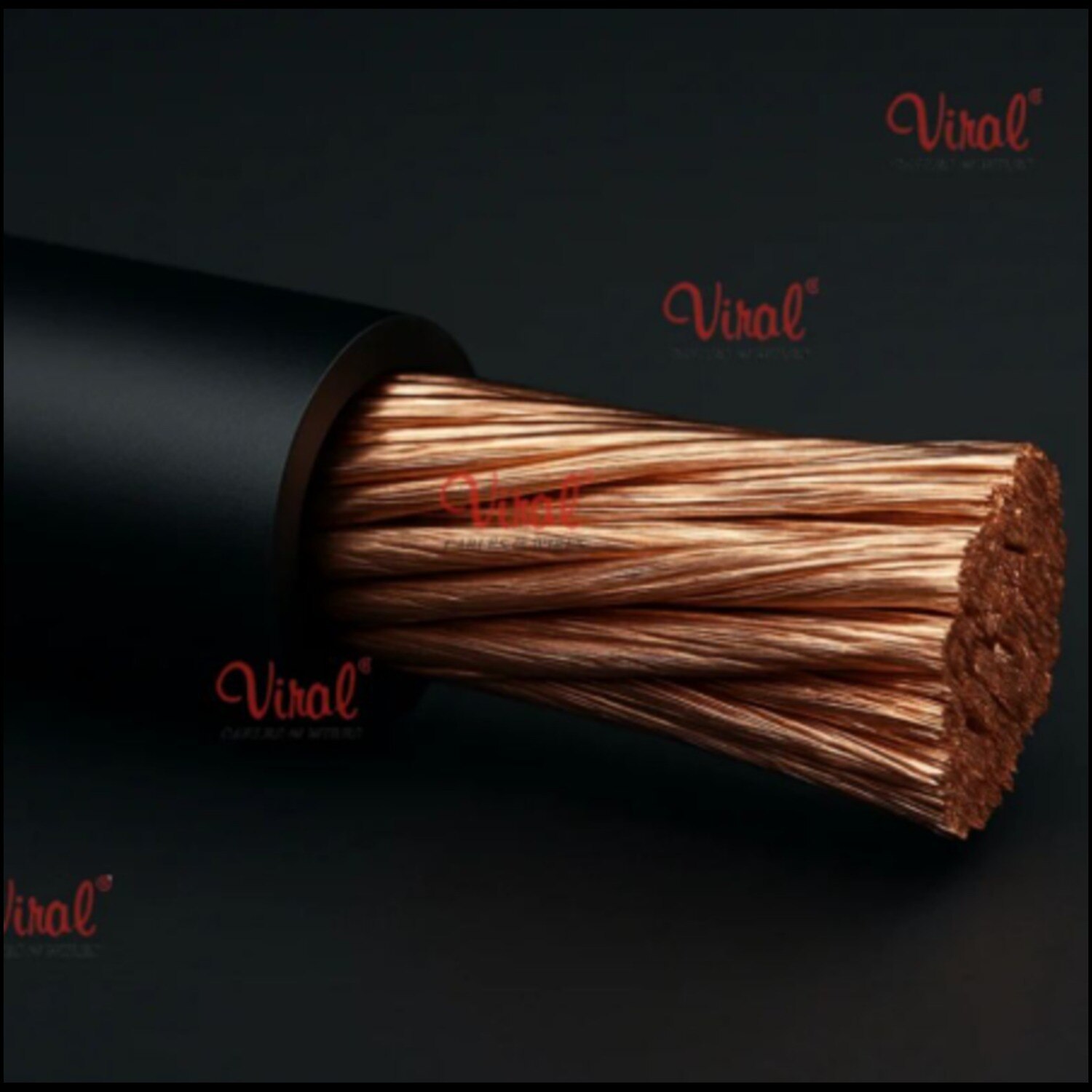
A “16 sq mm” marking does not prove the cable has the required copper area, current capacity or flexibility. By checking resistance, construction, circuit length, duty cycle, terminations and test documents, you can decide whether a cable is suitable for your welding set before installation.
Key takeaways
- Confirm 16 sq mm refers to the nominal copper conductor area.
- Compare construction, markings, length and welding duty as one specification.
- Inspect insulation, heat exposure, bends and terminations before energising.
- Request batch-specific test evidence from every supplier.
Prove That 16 Sq Mm Describes the Copper Conductor
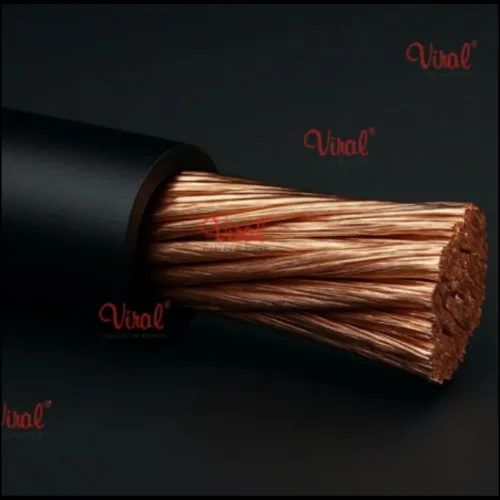
“16 sq mm” means the nominal copper conductor cross-sectional area, not the finished cable diameter. Confirm it with evidence tied to the exact cable, batch or lot—not a copied catalogue entry.
Request these documents and details:
- A datasheet naming the conductor material, IEC 60228 conductor class, strand count or strand construction, and nominal area.
- A routine or batch test report showing the conductor’s DC resistance and identifying the same cable, batch or lot.
- The manufacturer’s declared resistance value, test temperature and test method. For a conventional IEC 60228 Class 5 flexible 16 mm² copper conductor, use approximately 1.21 Ω/km at 20°C as the maximum reference; the declared value and documented method control the purchase decision.
Measuring the outside diameter cannot prove 16 mm² copper. Strand layout, insulation thickness and covering compound can change the finished diameter, even when the copper area is correct. A 120 mm² catalogue row, a generic “16 mm²” label or an untraceable copied specification is not proof.
For “16 sq mm electrode welding cables for details in new delhi,” ask for exact technical evidence before relying on local availability. Check the batch marking on the cable or packaging against the report, then compare resistance and construction with the delivered sample.
Read the Construction and Standard Markings as a Set
Construction and standard markings together reveal whether 16 mm² electrode welding cable can withstand repeated movement and arc-welding service; the area alone cannot.
| Specification | What to check | Why it matters |
|---|---|---|
| Conductor | IEC 60228 class, strand count or diameter, lay and stated flexibility | Fine strands and a suitable lay reduce kinking and fatigue; two 16 mm² cables can feel very different |
| Covering | Insulation and outer-cover material, thickness, abrasion, ozone, sunlight, oil and heat resistance | A generic PVC flexible cable is not automatically equivalent to a welding cable |
| Dimensions | Finished outside diameter and mass per metre | Confirm holder, lug and gland fit; thicker covering changes diameter and weight |
| Service rating | Rated voltage, minimum bend radius and allowable current | These define handling and electrical limits, not just conductor area |
Look for H01N2-D under EN 50525-2-81, an IEC 60245-6 reference where applicable, or the exact national specification named in the purchase contract. Request the manufacturer’s current rating with its duty-cycle basis and compare it with the stated bend radius and temperature limits.
For an IS 8130:1984 claim, demand the exact standard reference, cable type, test certificate, manufacturer batch or lot number, and matching markings on the cable or packaging. IS 9857 may apply when the contract specifies it; reject a vague “IS compliant” statement without the named standard and traceability.
A sample coil and datasheet should confirm every marking before purchase.
Match Cable Length, Complete Circuit and Welding Duty
A 16 mm² cable is suitable only after you match its current rating, length and complete welding circuit to the machine.
1. Require the manufacturer’s current rating with the stated duty cycle, ambient-temperature basis, cooling conditions, cable arrangement and whether the figure applies to one lead or the complete circuit. Do not use a generic flexible-cable ampacity table as proof of welding suitability.
2. Treat the electrode lead and work-return lead as one loop. Select both for the same current and duty-cycle rating unless the machine manufacturer specifies otherwise; an undersized return lead still causes voltage loss and overheating.
3. Calculate resistance before ordering. Loop resistance = one-way length × 2 × cable resistance. Voltage drop = welding current × loop resistance. At 1.21 Ω/km, a 20 m one-way run creates 40 m of copper loop: at 100 A, copper alone drops about 4.84 V and dissipates about 484 W at 20°C.
Hot copper and connector resistance increase both figures.
4. Size lugs, electrode holders, return clamps and glands for the actual conductor and finished cable diameter. Then check the welding machine’s maximum current, open-circuit voltage and connector system.
5. Compare duty-cycle claims only when test method, ambient temperature, current and cooling conditions match. A 60% claim cannot be converted with a universal formula such as multiplying by 1/√0.6.
When buying an electrode cable for welding equipment in Delhi, provide the lead lengths and machine data, then compare documented ratings rather than the 16 mm² label alone.
Inspect Damage, Heat Paths and Terminations Before Energising
A damaged jacket disqualifies an otherwise correctly sized welding cable. Inspect the complete electrode and return leads before connecting power, with extra attention to the electrode lead because it receives more bending, abrasion and contact with hot work.
1. Inspect the jacket from end to end. Reject broken copper strands, exposed conductor, cuts through the covering, flattened sections, hardening, swelling and deep abrasion. Flex suspicious areas gently; cracking, stiffness or separation indicates damage.
2. Examine heat paths at the electrode holder, return clamp, lugs and connectors. Discolouration, melted covering, blistering or a burnt smell identifies overheating or a loose connection. Keep the cable away from hot metal.
3. Check every termination. Confirm that the lug or connector accepts the actual conductor and finished diameter, uses the specified die, has clean contact surfaces and cannot rotate or pull loose. Reject loose lugs and solder-only terminations.
4. Do not treat a stated 60°C maximum conductor temperature as the limit for the covering, terminal, electrode holder or work clamp. Ask the supplier for each component’s temperature limit and whether the figure applies to continuous operation or a defined duty-cycle test.
5. Do not transfer a 90°C catalogue value from another cable to a 16 mm² cable listed at 60°C. Use the exact product’s evidence. Fully uncoil the cable during high-current welding; tight coils and bundles shed heat less effectively than the test arrangement.
Use a Supplier Enquiry That Produces Comparable Evidence
Give a 16 sq mm electrode welding cable supplier the same application brief and demand evidence in the same format. A New Delhi buyer should state welding current, maximum duty cycle, one-way electrode-lead length, return-lead length, holder and clamp type, installation arrangement and operating environment.
Viral Electronics PVT LTD / Viral Electronics LLP is one supplier you can contact for this specification-based enquiry.
- Conductor material, nominal area, IEC 60228 conductor class, strand count or strand diameter, lay and resistance at 20°C.
- Cable type, exact standard reference, covering material, covering thickness, finished diameter, mass per metre, rated voltage and minimum bend radius.
- Current rating, duty-cycle basis, ambient temperature, cooling arrangement, available cut lengths and cable or packaging batch markings.
- Batch or routine test certificate identifying the cable, lot and test method; reject “compliant” without a standard number.
Request a sample coil or cut end before approval. Compare the declared construction with the delivered cable, then inspect flexibility, jacket condition and strand layout.
| Evidence | What you compare |
|---|---|
| Datasheet | Declared area, construction, dimensions and ratings |
| Sample coil | Flexibility, covering damage and strand layout |
| Test certificate | Resistance, routine tests, standard and batch traceability |
Do not choose on price or local availability alone. The order is defensible only when the paperwork, sample and delivered markings agree.
Related products
 | Welding Cables 16 Sq mm Electrode Welding Cable Product Details: Nominal Conductor Cross-Section: 120 sq. mm Ambient Air Temperature: 30°C Standards Compliance: IS 8130:1984 Nominal Covering... View product → |
 | Welding Cables Product Details: Cable Size: 16 sq. mm Brand: Viral Ambient Air Temperature: 30°C Cooling Type: Air-cooled Duty Cycle: 60% Maximum Conductor... View product → |
Related products
 | Welding Cables Product Details: Ambient Air Temperature: 30°C Cooling Type: Air-cooled Duty Cycle: 60% Maximum Conductor Temperature: 60°C Available Sizes: 16 sq. View product → |
 | Welding Cables Double Insulated Welding Cable 16mm Product Details: Cable Size: 16 sq. mm Conductor Material: Copper Cable Grade: Welding Cable Voltage Rating: Up to 100 V Insulation Material: Rubber... View product → |