
A New Delhi buyer can find cable through a local manufacturer, authorised distributor, electrical market, project supplier or direct factory enquiry, but a catalogue label alone cannot establish suitability. By the end, you will know how to define the cable, compare technically equivalent quotes, verify test documents and check whether local availability matches your required construction and drum length.
Key takeaways
- State whether the voltage is operating, test, or impulse voltage.
- Choose a flexible test lead or screened power cable before requesting quotes.
- Specify conductor, insulation, shielding, sheath, voltage class, and drum length.
- Compare traceable test records, stock status, lead time, freight, and delivered cost.
Start with the application, voltage class and sourcing route
A 2 kV-to-100 kV label does not prove that a cable suits permanent power distribution. Confirm whether you need a flexible test lead for laboratory or capacitance-test equipment, or a screened power cable for a substation, plant, or buried installation. Ask whether the stated voltage is operating, test, or impulse voltage.
State the system voltage as U0/U or U0/U(Um), plus AC or DC service. In Indian practice, high voltage generally covers above 650 V to 33 kV; extra-high voltage exceeds 33 kV. For a copper high voltage cables supplier in New Delhi, choose the route that matches the construction and project responsibility.
| Route | Best fit | Check before ordering |
|---|---|---|
| Local manufacturer | Repeated or engineered power-cable orders | IS 7098 (Part 2), construction, lead time |
| Authorised distributor or electrical market | Standard 11 kV or 22 kV stock | Exact drum length and approval for substitution |
| Project supplier | Substation or turnkey installation | Terminations, testing and site delivery |
| Direct factory enquiry | Custom screens, armour or long lengths | Minimum order, drum charges and freight |
Send every supplier an RFQ specifying conductor area and class, XLPE insulation, screen size, sheath, armour, outer diameter, bend radius, installation method, short-circuit duration, soil conditions and termination type. Request the exact IS 7098 edition or IEC 60502-2 basis, routine-test record and traceable batch documents.
Compare copper reference date, net copper weight, tax, freight, testing and drum charges.
Confirm whether you need a test lead or a power cable
A 1 core copper high voltage cable is suitable only when its electrical rating, construction and installation conditions match your equipment. First decide whether you need a temporary test lead or a permanent power cable: a 2 kV-to-100 kV test lead may be designed for laboratory or capacitance-testing equipment, not continuous three-phase distribution.
Do not treat “2 kV minimum” and “100 kV maximum” as operating-voltage ratings. Ask the supplier to state whether each figure means operating voltage, withstand test voltage, impulse voltage or a catalogue range.
Check these points before accepting a quotation:
- Confirm the rated voltage as U0/U or U0/U(Um), such as 6.35/11 kV (12 kV), rather than accepting “HV.”
- For permanent distribution, specify the applicable construction standard, such as IS 7098 (Part 2) for many 3.3 kV-to-33 kV XLPE cables or IEC 60502-2 for 6 kV-to-30 kV cables.
- Match conductor cross-section to the installation: trefoil or flat formation, spacing, burial depth, soil thermal resistivity, ambient temperature and permissible conductor temperature change ampacity.
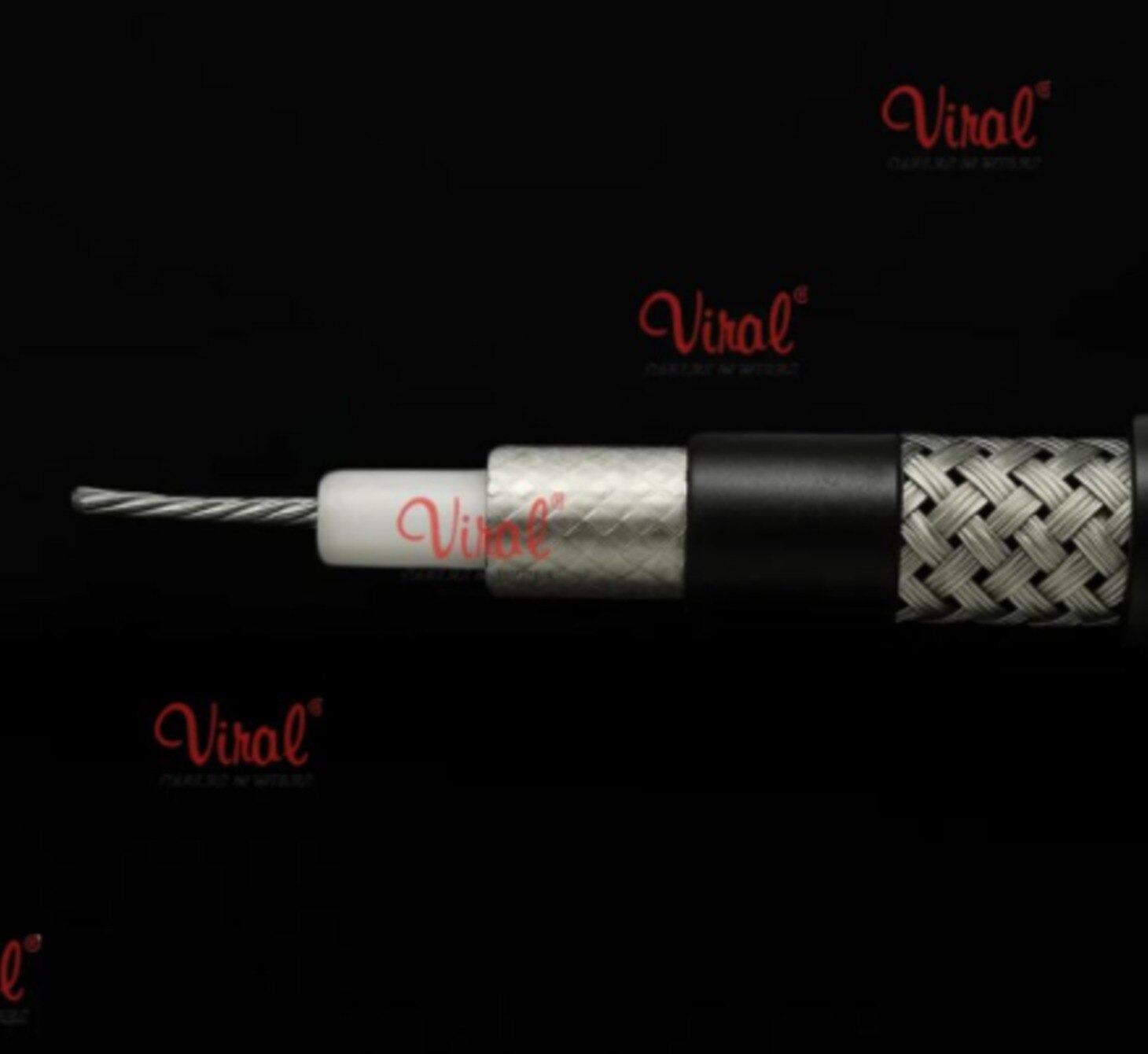
- Specify the conductor screen, XLPE insulation, insulation screen, metallic screen material and area, and outer sheath; screen fault-current capacity is separate from conductor ampacity.
- Confirm that the cable is intended as one of three phase conductors, and check its outer diameter, minimum bend radius and termination compatibility.
If the supplier cannot identify the voltage basis, screen fault rating and intended use in writing, do not substitute a readily available cable.
Send suppliers a construction-specific RFQ
A supplier cannot price “high-voltage copper cable” accurately without its construction. Ask every New Delhi supplier to answer the same technical questions before issuing a quotation.
- What are the system voltage and maximum system voltage, stated as U0/U or U0/U(Um), and is service AC or DC?
- Is the cable for permanent power distribution or a test lead? Confirm whether any stated 2 kV minimum or 100 kV maximum means operating, test, impulse, or catalogue voltage.
- What conductor cross-section, copper grade, conductor class, and resistance will you supply?
- Is the insulation XLPE, EPR, silicone rubber, or another material? State the applicable standard, such as IS 7098 (Part 2), and its exact edition for a 3.3 kV-to-33 kV XLPE cable.
- What metallic screen or shield size, armour type, and sheath material are included?
- What are the finished outer diameter, minimum bend radius, conductor screen and insulation screen details, and termination compatibility?
- How will you install it: tray, duct, buried route, substation, laboratory equipment, or another method? State ambient temperature, soil conditions, grouping, and short-circuit duration.
- What drum length can you supply, and what are the cable’s net copper weight, test requirements, and delivery location?
A copper hv cable manufacturer in delhi should also identify the exact construction behind its stock description. Without these answers, an available 11 kV cable can differ in screen, sheath, armour, or conductor area and cannot be substituted without engineering approval.
Demand standards, test records and traceable compliance
A certificate marked “tested” does not prove that the offered cable matches your requirement. Request the exact voltage designation, such as 6.35/11 kV or U0/U(Um), and compare it with the project specification; “high voltage” alone is incomplete.
| Evidence | What it must identify | What it proves |
|---|---|---|
| IS 7098 (Part 2) declaration | Edition, voltage class, conductor class and cable design | Compliance for applicable XLPE cables from 3.3 kV through 33 kV |
| IEC 60502-2 reference | Rated voltage and Um, conductor, insulation and sheath construction | Suitability for extruded cables from 6 kV to 30 kV, Um 36 kV |
| Routine-test record | Drum or batch number, conductor resistance, partial discharge and voltage withstand results | The supplied length passed production testing |
| Type-test report | Identical conductor material, cross-section, screen, insulation, sheath, voltage class and standard | The tested design corresponds to the offered construction |
| Dimensional report | Insulation thickness, screen dimensions, sheath thickness and outer diameter | The cable has the physical construction stated in the quotation |
For a 1 core copper high voltage cable, also verify whether the report covers a three-cable circuit in trefoil or flat formation. Current rating depends on spacing, burial depth, soil thermal resistivity, screen bonding and permissible conductor temperature, not copper area alone.
Ask for a manufacturer-signed declaration linking the batch number, drum length and test records to the quotation. Check copper high voltage cable availability by this exact construction and drum length; a stocked 11 kV cable with a different screen or sheath is not an automatic substitute.
Higher ratings require IEC 60840 or IEC 62067, not an unspecified “IS standard.”
Compare availability, drum lengths and delivered cost
A low price per metre is not a low delivered cost if the drum is too short, too heavy to transport, or leaves an unplanned joint. Compare each offer against the usable route length, termination allowances, joint locations, maximum transportable drum size and mass, and the dispatch length actually available.
| Route | Availability | Drum and cost check |
|---|---|---|
| Local stock | Fastest dispatch, but verify exact conductor area, screen, sheath, armour and U0/U(Um) designation | Confirm stock drum length, net copper weight, freight, tax, testing and any cutting charge |
| Factory supply | Best fit for long or nonstandard one-piece lengths; production time applies | Request manufacturing length, drum dimensions, gross mass, delivery date and price-adjustment formula |
| Direct enquiry | Lets you compare construction and production capacity before committing | Obtain a complete technical offer, not a catalogue metre rate; include freight, drum, testing, tax and unloading |
Check copper high voltage cable availability by construction and drum length, not by a generic catalogue title. An 11 kV XLPE cable in stock is not an approved substitute for a cable with a different screen, sheath or conductor class.
A copper high voltage cables supplier in New Delhi should quote the rated voltage as U0/U or U0/U(Um), not simply “HV.” For XLPE cable from 3.3 kV to 33 kV, ask a copper hv cable manufacturer in delhi for the applicable IS 7098 Part 2 edition and routine-test record.
Viral Electronics PVT LTD / Viral Electronics LLP can be included in the same comparison only after its offer states these fields and the delivered basis.
Related product
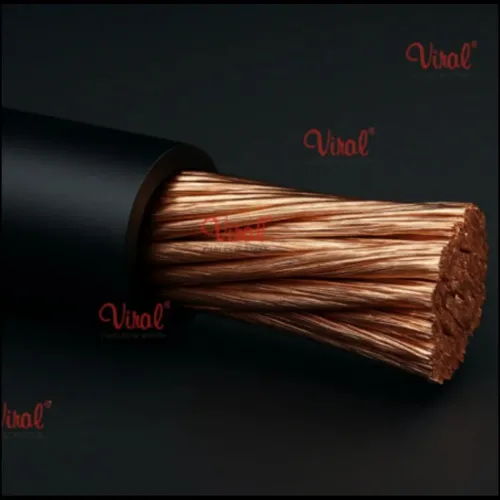
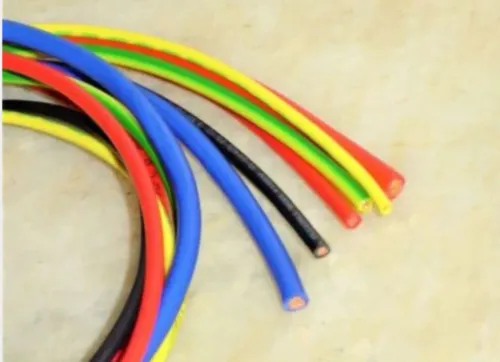
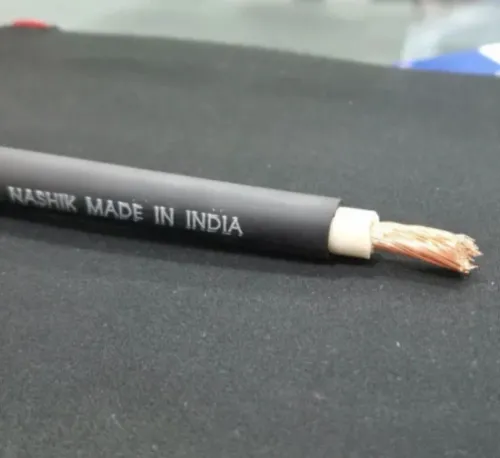
 | HV Cables 1 Core Copper High Voltage Cables Number of Cores 1 Core Conductor Material Copper Insulation Material PVC Min Voltage 2 kV Max Voltage 100 kV Type High Voltage We at viral... View product → |
Frequently asked questions
How do I tell whether I need a test lead or a power cable?
Choose a flexible test lead for laboratory or capacitance-test equipment. Choose a screened power cable for permanent substation, plant, or buried installations.
What should a copper high-voltage cable RFQ include?
State the application, voltage class, operating environment, conductor size, number of cores, insulation, screen, sheath, flexibility, required length, termination, and delivery location.
Which compliance documents should I request from a supplier?
Request the applicable standard, manufacturer’s datasheet, routine and type-test records, batch or drum identification, and documents that connect the test results to the supplied cable.
How should I compare copper high-voltage cable availability in New Delhi?
Compare confirmed stock, manufacturing lead time, available drum lengths, minimum order quantity, freight, cut-length restrictions, and the delivered cost for your required quantity.